- Call Us Today! 855 ROOF-001
- Email: info [at] RoofTechnologies.com

Air Conditioners
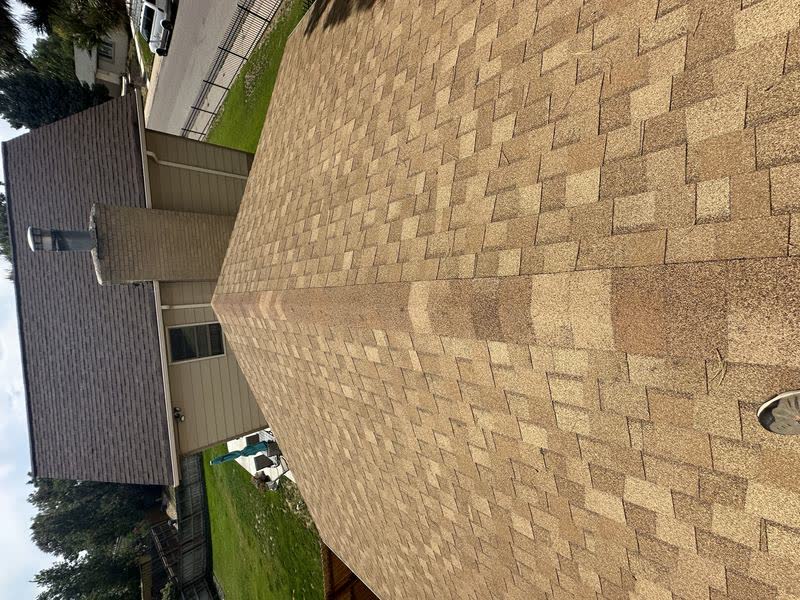
If hail was big enough to damage your roof, there is a very good chance it also destroyed your air conditioning condenser. The same storm that shreds asphalt shingles flattens the aluminum fins on top of your outdoor unit, and the damage is almost always covered under your homeowner policy. Roof Technologies focuses specifically on AC condenser replacement after hail events, handled alongside your roof claim so the whole property gets restored in one coordinated project.
This isn't general HVAC service. We don't chase refrigerant leaks on twenty-year-old systems, replace capacitors, or install heat pumps for preventive upgrades. What we do is get storm-damaged condensers out of your yard and new ones back in, documented correctly, claim approved, usually in a single day of installation.
How Hail Actually Damages an AC Condenser
The outdoor unit, the condenser, is a metal box with a fan on top and a coil wrapped around the inside. The coil is made of copper refrigerant tubing with thousands of thin aluminum fins pressed onto it. Those fins give heat somewhere to escape as refrigerant flows through. Hail, even smaller hail, bends and flattens those fins from the outside in.
- Fin Flattening: Impact crushes the delicate aluminum fins closed. Airflow across the coil drops immediately.
- Coil Deformation: Larger hail can dent or perforate the copper tubing itself, either causing an immediate refrigerant leak or weakening the metal so it fails months later under normal vibration.
- Cabinet Damage: The metal shroud around the unit gets pocked, dented, and cracked. On units with plastic louvers or tops, hail often punches right through.
- Fan Blade Damage: Hail bouncing into the unit from the grille above can nick fan blades, throw them out of balance, and stress the motor bearings.
Cosmetic vs. Functional Damage: It's All Functional
Insurance companies sometimes try to classify bent fins as "cosmetic" and cover only a coil comb or a fresh coat of paint. That's not accurate, and we push back every time. The fins exist for a reason: they are the heat-exchange surface of your system. A condenser with widespread fin damage:
- Runs Hotter: Less surface area means refrigerant can't dump heat efficiently. High-side pressures climb, efficiency drops, your energy bills go up, and the system has to run longer to meet thermostat setpoint.
- Compresses Harder: Your compressor, the expensive part, runs against higher pressures. That shortens its life significantly.
- Loses Capacity: On the hottest day of the year, when you need cooling the most, a damaged coil simply can't keep up.
- Leaks Later: Micro-cracks in the tubing often don't leak immediately. They open up over a season or two, at which point the original storm claim is closed and the homeowner is paying out of pocket.
- Voids Warranty: Most manufacturers consider any physical damage to the coil a warranty void. That matters if the compressor fails next summer.
Comb-outs and repaints are not a fix. They're a cover-up. A properly documented storm claim should include full condenser replacement, and that's what we fight for.
How We Handle the Insurance Claim
This is the part most homeowners find daunting, and the part we've done hundreds of times. Because we're already on your property handling the roof, we fold AC into the same claim workflow rather than making you start a second one.
- On-Site Documentation: We photograph the unit from all four sides, top down through the fan, and close-up macros of fin damage patterns. Serial plates, manufacturer labels, and model numbers are captured.
- Damage Mapping: Hail leaves directional evidence. We map impact orientation across the coil so the pattern matches the storm direction documented on your roof, which strengthens the claim.
- Adjuster Meeting: When the insurance adjuster comes out, we're there. We walk the roof and the AC with them, point out damage they might miss, and hand over photo documentation in organized form.
- Supplement Requests: If the initial scope underpays the AC line item or excludes it entirely, we submit a supplement with manufacturer documentation, code requirements, and pricing to get it corrected. This is routine.
- Approval and Scheduling: Once the revised claim is approved, we order the replacement unit and schedule installation.
Installation Timeline and What to Expect
The actual swap is fast. Most single-family home condenser replacements are a one-day job, front to back.
- Recovery: Existing refrigerant is recovered per EPA regulations before any disconnection. No venting, no shortcuts.
- Removal: The old unit is disconnected at the service disconnect, uncoupled from the lineset, and hauled away for proper recycling.
- Pad and Lineset Prep: The concrete or composite pad is leveled. The existing lineset is flushed, inspected, and replaced if compromised.
- New Unit Set: The new condenser is set, brazed, evacuated with a vacuum pump to remove moisture, and charged to manufacturer spec by subcooling or superheat.
- Startup and Verification: We verify refrigerant pressures, temperature split across the indoor coil, amp draw on the compressor, and cycle operation. You get a commissioning sheet showing the numbers.
- Cleanup and Registration: Old packaging is hauled, the unit is registered with the manufacturer in your name for warranty, and paperwork is handed over.
Brands We Install
We typically replace with the same major brands homeowners already have: Carrier, Bryant, Lennox, Trane, American Standard, Rheem, and Goodman. Matching the existing indoor coil and furnace is important for warranty and for AHRI-rated efficiency. If your original unit is obsolete and the match isn't available, we'll walk you through the options and make sure the insurance scope reflects a like-kind replacement.
Why It Pays to Replace, Not Patch
- Full Manufacturer Warranty: New units come with a full parts warranty starting from day one, typically ten years when registered.
- Restored Efficiency: Original SEER rating, original capacity, and power bills back to normal.
- No Leaked Refrigerant: No chasing a slow leak later in the season when the claim is closed.
- Clean Resale: When you sell, a documented storm-replacement unit shows up in an inspection report. A dented, combed-out coil flags the home.
- One Crew, One Claim: Roof, gutters, and AC are all being addressed under the same event, with one coordinated timeline and one single point of contact at Roof Technologies.
Had a Hail Storm? Get Your AC Documented Now
Most policies have a time limit on storm claims, usually one year from the date of loss. If hail has passed through recently, the window to document AC damage closes alongside the roof window. Don't wait until next cooling season to find out the hard way.
Call 855 ROOF-001, email info [at] rooftechnologies.com, or submit a storm inspection request. We'll come document the roof and the AC in one visit.
Still have questions? Contact us
Air Conditioners FAQ
Answers to common questions about AC installation, service, and hail-damage claims.