- Call Us Today! 855 ROOF-001
- Email: info [at] RoofTechnologies.com

Standing Seam Metal Roofing — Concealed Fastener, 40 to 70 Year Service Life
DG Metals snap-lock, Drexel Metals mechanically-seamed, McElroy Maxima, Englert UltraCool, Sheffield Metals, ATAS aluminum. 24-gauge steel and .032–.040 aluminum, Kynar 500 PVDF finish, UL 2218 Class 4 impact. The longest-lived metal system — no exposed screws to back out over time.
Concealed-Fastener Vertical Panels — The Longest-Lived Metal Roof
Standing seam is our default metal system when long-term performance and architectural appearance both matter. Vertical panels with raised mechanical or snap-lock seams, fastened to the deck with concealed floating clips that allow the panel to expand and contract with thermal cycling — no exposed screws to back out over time. A properly installed standing seam roof with a Kynar 500 finish reliably delivers 40 to 70 years of service life and keeps passing UL 2218 Class 4 impact and UL 580/1897 Class 90 uplift while it does it.
It is the metal system you want when the roof is part of the architecture — ranch-modern, mountain-modern, contemporary, agricultural, retail, school, healthcare. Long simple slopes (gables, sheds, ranches) are where standing seam is at its best. Heavily cut hip-and-valley suburban roofs frequently make better sense in stone-coated steel or designer asphalt, and we'll tell you so on the walk.
The panel is the easy part — the install is what matters. Profile-matched ridge, eave, and rake trim. Concealed clips with the right hold-down for thermal load. Pipe boots rated for metal-panel rib heights. Mechanically seamed (not snap-lock) on any low-slope section under 3:12. Underlayment matched to attic temperatures. We're a Class 4 hail-country contractor and the install detail is where we earn the warranty on every project.
Standing Seam Profiles We Stock and Install
This is the actual list of standing seam profiles we install across Colorado, Kansas, Missouri, Nebraska, and Wyoming — from local Front Range mills to national premium suppliers. Snap-lock for standard residential pitch; mechanically seamed (double-lock) for low-slope and high-wind elevations. All available in Kynar 500 / PVDF finish; aluminum profiles available where corrosion drives material selection.
Snap-Lock Standing Seam
Local Front Range coil supplier and panel mill. Our default for residential snap-lock.
- Profile1.5″ or 1.75″ snap-lock leg
- Width12″, 16″, 18″ on center
- Gauge24 ga steel default, 26 ga available
- FinishKynar 500 PVDF, full color palette
- Lead TimeDays, not weeks — local fabrication
Mechanical-Lock Standing Seam
Premium mechanically-seamed panel. Our default for low-slope and high-wind exposures.
- ProfileDMC 100 / 150 / 175 mechanical lock
- SeamDouble-locked, 90° or 180° field-seamed
- Gauge24 ga steel, .032–.040 aluminum
- FinishKynar 500 PVDF, Energy Star variants
- SlopesRated to 1:12 with proper detail
Maxima
Strong commercial spec library. Maxima FW for face-fastened applications, Maxima for clip-mounted.
- Profile1.75″ or 2.0″ mechanical seam
- Gauge24 ga and 22 ga commercial
- Width12″, 16″, 18″
- FinishPVDF, SMP, Galvalume
- CertUL 90, FM 4471, Florida HVHZ
UltraCool Energy Star
Reflective Kynar finish meaningfully drops attic temps. Series 1300/1304 mechanical-lock substrate.
- ProfileSeries 1300 / 1304 mech-lock
- Gauge24 ga steel, aluminum available
- CoatingUltraCool Kynar 500 reflective
- EnergyEnergy Star & CRRC certified
- CertFlorida product approved
SMI 1.75 / 2.0
Strong WeatherTight warranty program for low-slope and commercial mechanically-seamed installs.
- ProfileSMI 1.75″, SMI 2.0″ mech-lock; SS150/SS675 snap
- Gauge24/22 ga steel, aluminum, copper
- Width12″, 16″, 18″, 20″
- FinishKynar 500 PVDF, full WeatherTight palette
- WarrantyWeatherTight system warranty available
Aluminum & Zinc Standing Seam
Where corrosion or specialty geometry is in play. Aluminum, zinc, copper, batten-seam, flat-lock.
- Material.032–.040 aluminum, VMZINC, copper
- ProfileBelvedere, MultiCon, Snap-Clad, batten-seam
- FinishKynar 500, mill, anodized, patina
- ApplicationCoastal, specialty residential, restoration
- CertUL 90, FM 4471, ICC-ES
What Decides 40 Years vs. 15 Years
The panel does not fail. The seams, terminations, fasteners, and underlayment fail. Every standing seam install we do is built around these details — this is where contractor competence shows up on a 40-year-life roof.
Snap-Lock vs. Mechanical Seam
Snap-lock panels are pre-formed at the mill, the male leg snaps over the female leg by hand pressure on the rooftop — fast, lower labor cost, fine on any slope 3:12 and steeper. Mechanically seamed (double-lock) panels are folded with a powered seamer that crimps the legs into a 90° or 180° lock with butyl tape inside the seam — required by every manufacturer below 3:12, recommended for high-wind elevations and any commercial low-slope exposure.
We default to snap-lock on residential pitched roofs. We default to mechanical-lock on low-slope, on commercial elevations exposed to 100+ mph winds, and on Florida-product-approval-grade specifications.
Concealed Floating Clip System
The clip is the load-path between the panel and the deck, and it has to allow the panel to expand and contract with temperature without fastener-back-out, panel oil-canning, or seam tear. We install concealed floating clips at every panel seam — spacing per manufacturer schedule, hold-down at the appropriate point on the panel, and zero exposed fasteners in the field.
On long Front Range and Wyoming runs we go to clip spacing tighter than the residential default to handle thermal cycling on dark colors that can hit 165°F surface temps in summer. The clip is invisible after the panel is set; the clip is also what decides whether the roof is still flat at year 40.
High-Temp Synthetic Underlayment + Ice & Water
Asphalt-paper underlayment will cook under a metal panel. We install a high-temperature synthetic underlayment rated for 240°F+ continuous over solid sheathing, full peel-and-stick ice-and-water shield in valleys, eaves, around every penetration, and at ridges on low-slope sections. Class 4 hail country adds full-coverage I&W on low-slope and re-entrant geometry.
On re-roofs we tear off to the deck, verify sheathing condition, replace any rotted sections, and correct under-vented attics before a panel goes on. Under-venting cooks underlayment and shortens the life of any roof — metal included.
Profile-Matched Trim, Pipe Boots, and Ridge
Generic shingle-style pipe boots do not work on metal panels. We install EPDM-rated boots sized for the panel rib height and pre-formed for the panel pitch. Ridge details are vented through a ridge cap detail that works with the panel, not against it. Eave drip and rake trim is matched to the manufacturer profile in the same Kynar finish — not generic painted aluminum.
HVAC, chimney, and skylight curbs get manufacturer-detail flashing kits that seat to the panel rib. Where we cut the panel field for a penetration, we use the manufacturer's recommended sealant — not a tube of generic silicone.
Snow Retention — Required on Mountain Pitches
Standing seam sheds snow. That is a feature in the flatlands and a hazard above an entry below a 10:12 slope. We install rail-mounted snow retention (bar-type, pad-type, or fence-type) that clamps to the panel seam without penetrating it — so the panel warranty stays intact and the system holds the slide in place above doorways, walkways, HVAC condensers, and any other area where a single large slide would be dangerous.
Mountain home snow retention adds typically $1,500–$4,000 depending on linear footage. We size the system for the actual snow load at the elevation, not a generic catalog number.
Oil-Canning Mitigation
Oil-canning is the visual waviness on flat metal panels in oblique light. It is aesthetic, not structural — no manufacturer warrants against it. We minimize it by spec'ing narrower panels (12–16″ on residential), 24-gauge or heavier substrate, low-gloss or matte Kynar finishes, and where the architecture supports it, a striated or pencil-rib panel that visually reads identical from the curb but is far less prone to the flat-pan effect.
On premium architectural residential where oil-canning would be most visible, we frequently spec a striated panel by default and confirm with the homeowner during sample review.
Class 4 Standing Seam — Insurance Discount Math
UL 2218 Class 4 is the highest impact rating available to roofing materials, tested against a two-inch steel ball dropped from twenty feet. Most carriers in CO, KS, MO, NE, and WY discount the wind/hail portion of premium by 15–35% on Class 4 roofs — which on a typical $4,000–$6,000 annual policy is $500–$1,500 per year back. On a 40-year standing seam, that's $20,000–$60,000 of cumulative discount over the life of the roof.
Class 4 standing seam is panel-and-substrate dependent. 24-gauge steel in tested profiles passes Class 4. Aluminum at .040 typically passes. The ratings come from the panel mill — we'll provide the certificate that goes to your carrier as part of the warranty package.
Important detail: hail damage on standing seam is usually cosmetic, not functional. The panel keeps shedding water through severe hail. But cosmetic dings are visible from the ground and the carrier may or may not pay for cosmetic damage on a metal roof. See our blog: cosmetic vs. functional hail damage on metal.
How Standing Seam Performs in CO/KS/MO/NE/WY Climate
Snow: standing seam sheds snow. Above 10:12 we install snow retention as standard practice; on mountain homes (Evergreen, Conifer, Estes Park, anywhere on the I-70 corridor) snow retention is a structural-safety item, not aesthetic. Rail-mounted bars or pads clamp to the seam without penetrating — the roof warranty stays intact.
Wind: on open Kansas plains, eastern Colorado, the Wyoming wind belt, and exposed Front Range mesas, wind uplift is the dominant claim driver, and a properly clipped standing seam is typically stronger on uplift than any single-ply membrane system. UL 580 Class 90 is the standard test, and most premium standing seam profiles ship with Florida HVHZ approvals that translate directly to 150 mph wind warranty.
Fire: Class A fire rating is standard on every steel and aluminum standing seam install — the assembly is non-combustible. A meaningful spec point in WUI (wildland-urban interface) zones across Colorado mountain communities and post-Marshall Fire Boulder County. A metal roof on a wood-deck home is the easiest fire-zone upgrade available.
Lightning: a metal roof does not attract lightning, and if struck, disperses the charge across the surface rather than igniting — metal is the safest roofing material in a strike. We'll explain this on the walk-through if the homeowner brings it up.
Ask About Class 4 PricingStanding Seam Pencils Out Here
- Long, simple architectural slopes — gables, sheds, ranches, mountain-modern rectangles. Where the panel runs end-to-end without termination.
- Mountain and high-altitude homes needing to shed snow safely. Rail-mounted retention plus profile-matched flashing keeps the warranty intact.
- Class 4 hail-country long-hold homes — Front Range, eastern CO, Kansas plains, Missouri Western border, Eastern NE. The 40-year horizon math wins clean.
- Premium residential where the roof reads as part of the architecture. Matte Black, Charcoal, Forest Green snap-lock are HOA-approved increasingly often.
- Light-commercial — retail, school, healthcare, municipal. Mechanically seamed Drexel, McElroy, Englert, or Sheffield with WeatherTight system warranty.
- Re-roofs after a Class 4 claim where the owner wants the last roof they will ever buy on the house.
- Energy-efficiency-focused owners — Englert UltraCool Energy Star Kynar drops attic temps by measurable amounts in summer.
Where Stone-Coated or Asphalt Wins
- Heavily cut hip-and-valley suburban roofs with multi-pitch dormers, dead valleys, and complex cuts. The labor relative to a simpler asphalt or stone-coated install balloons fast.
- HOAs that explicitly ban visible metal in covenant restrictions — stone-coated steel reads as tile or shake and clears review.
- Owners worried about cosmetic hail dings — standing seam dents in severe hail. Stone-coated hides it in the chipped-stone surface.
- Short-hold homes (under 7 years). The up-front delta over architectural asphalt rarely repays before the sale.
- Tight-budget re-roofs driven by an actual cash check, not a financing horizon.
- Low-slope sections below 1:12 — outside even mechanically seamed range. We spec TPO or PVC on those sections and tie the metal in at the transition.
- Older rafter-framed roofs needing structural review — standing seam adds little weight, but framing has to be confirmed.
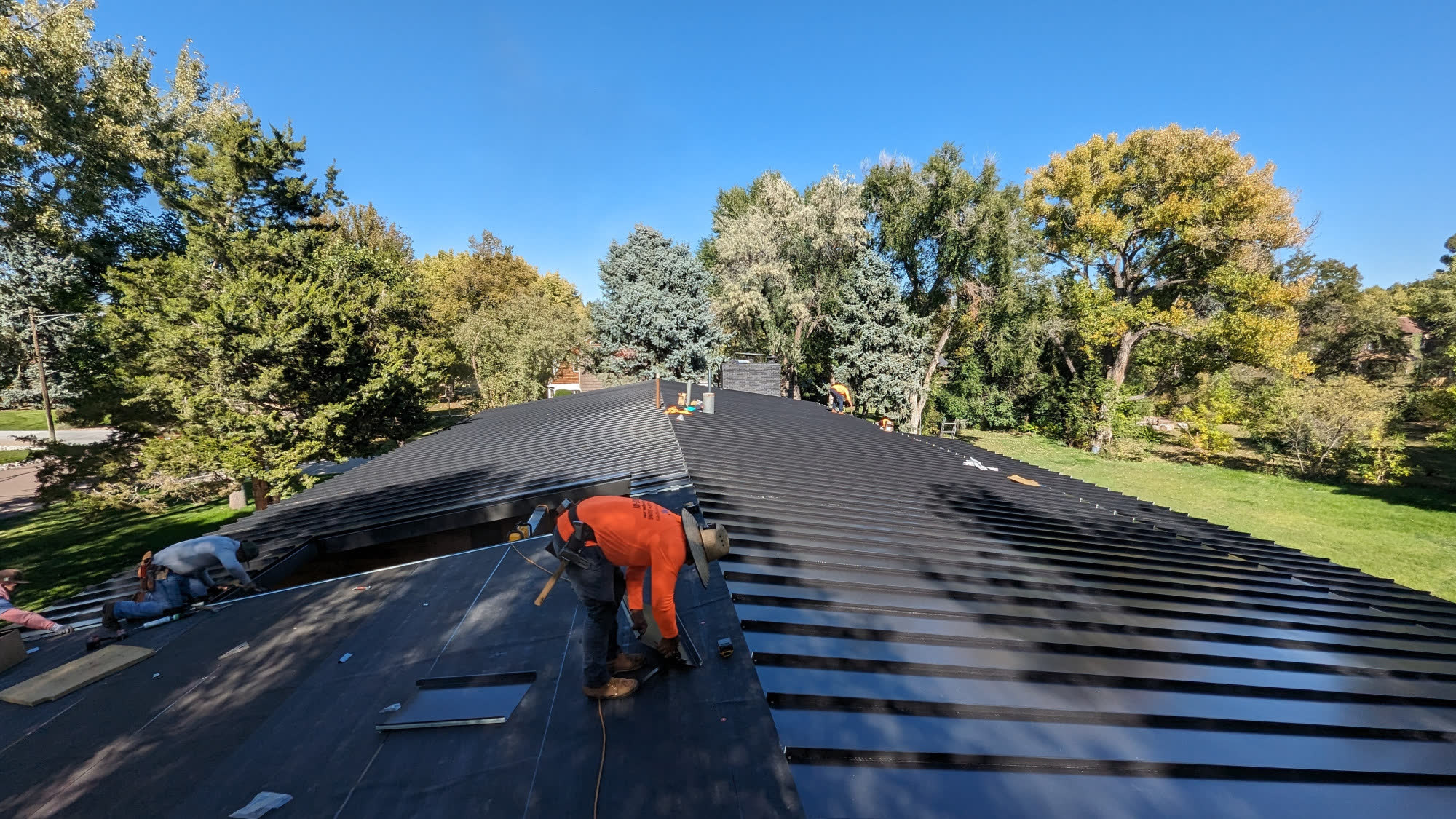
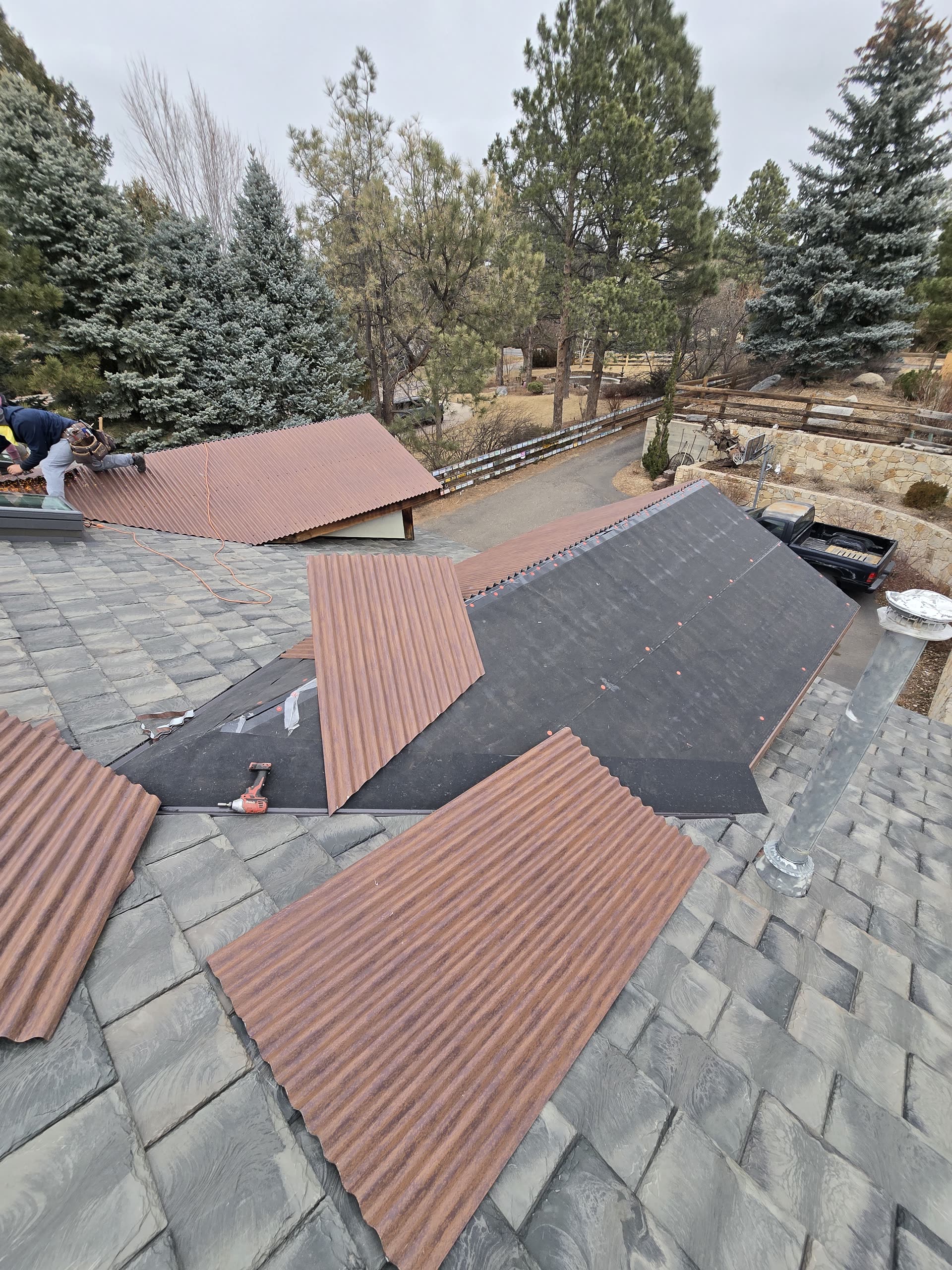
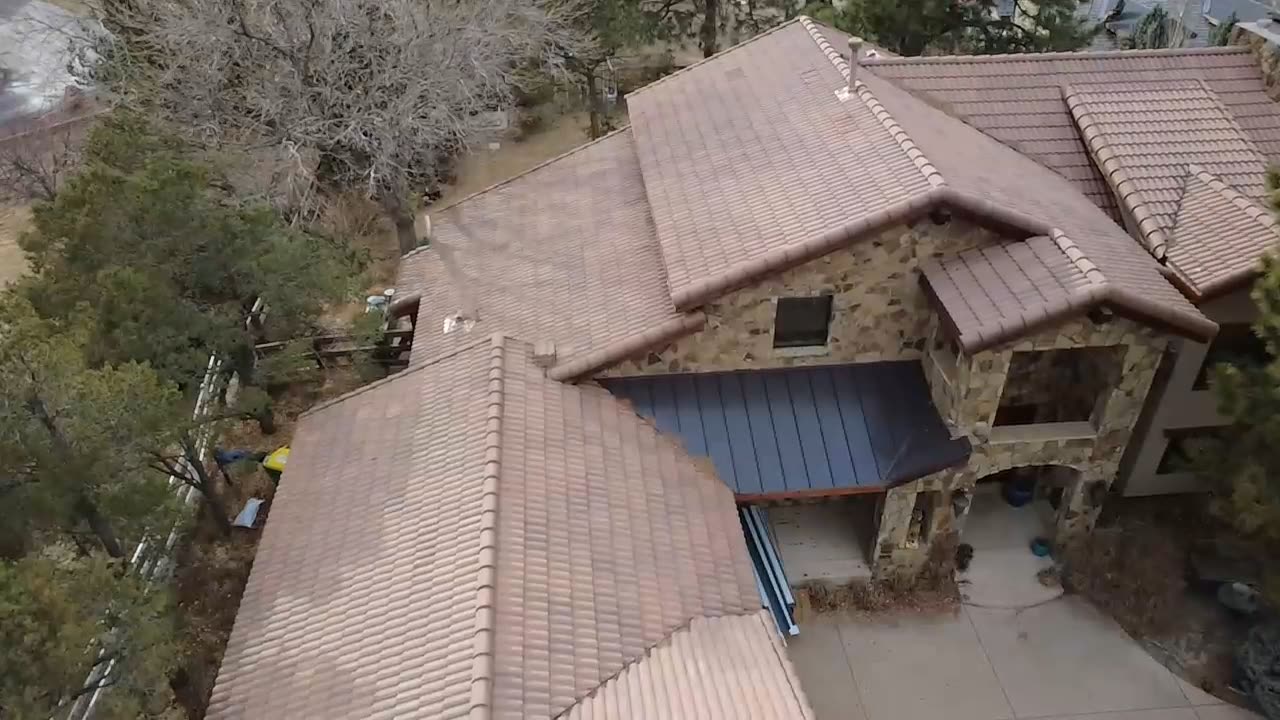
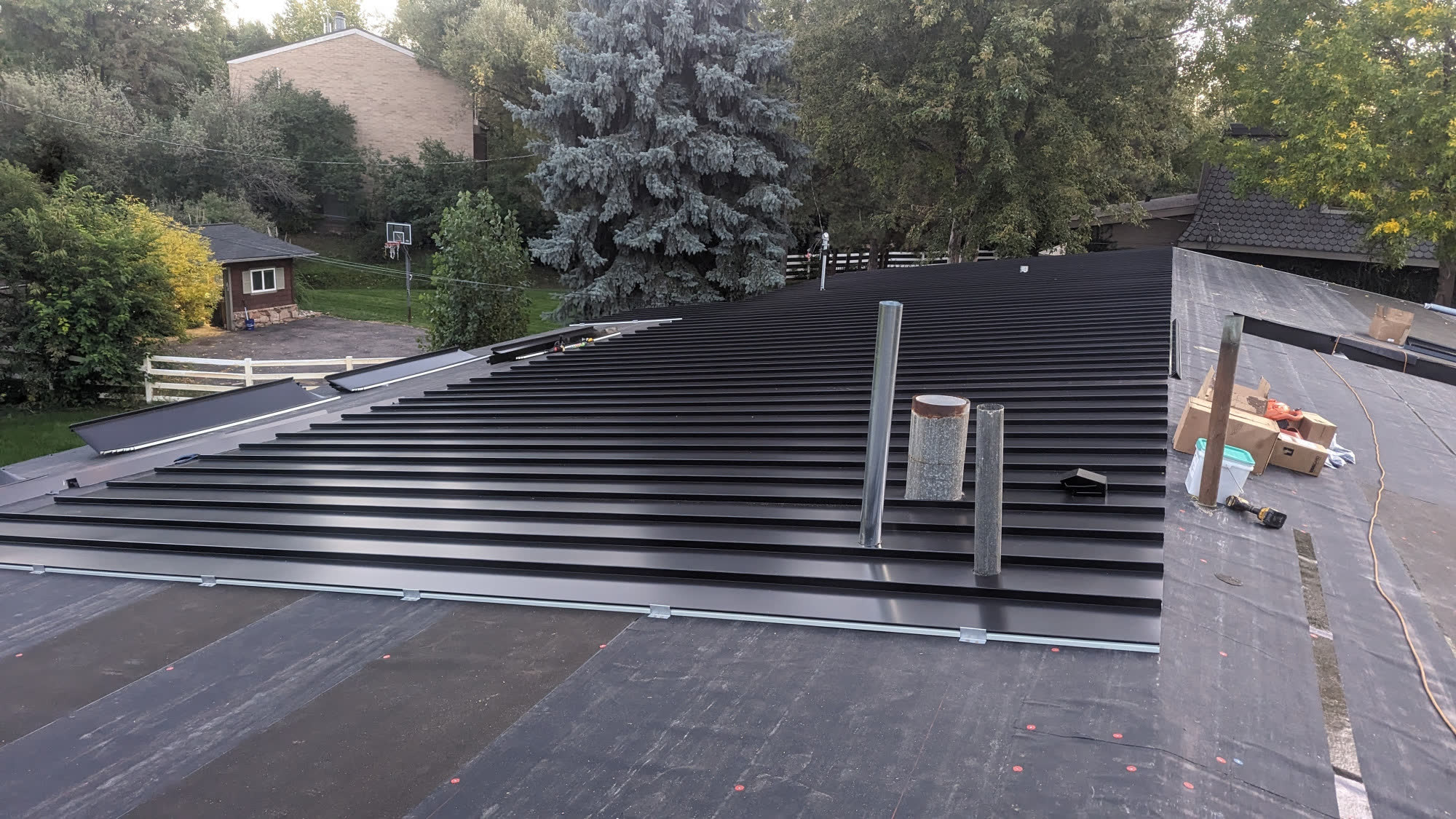
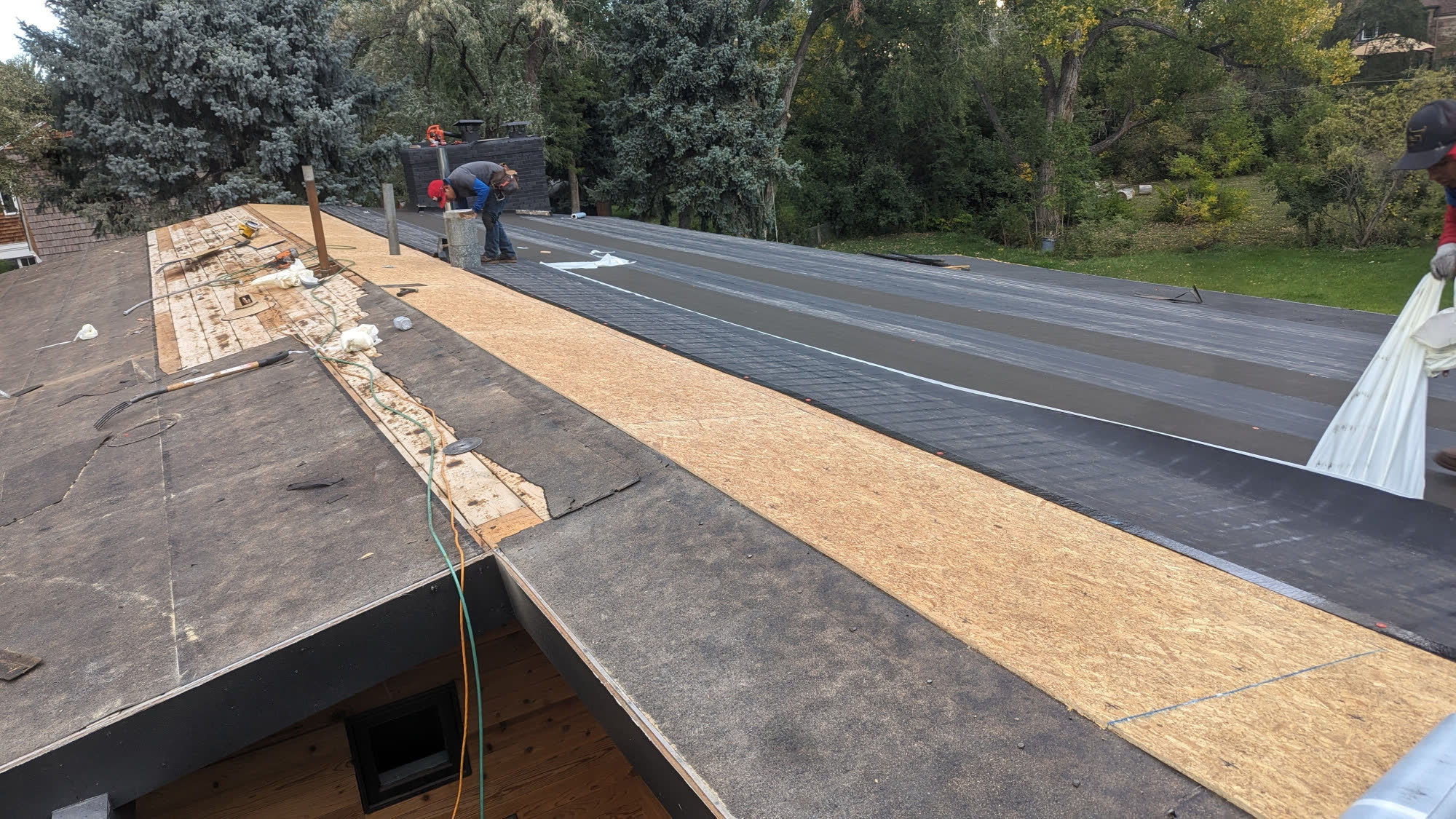
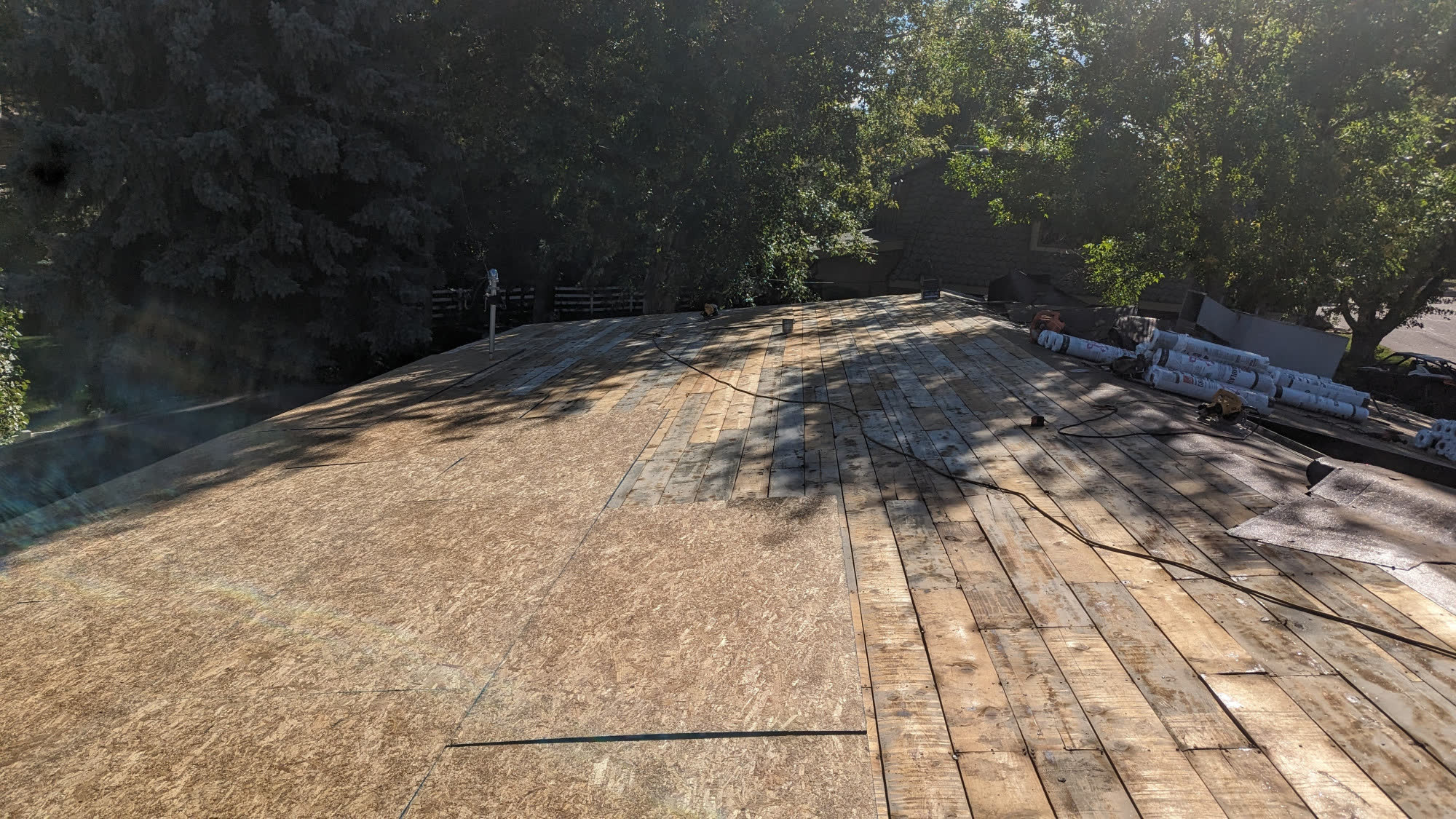
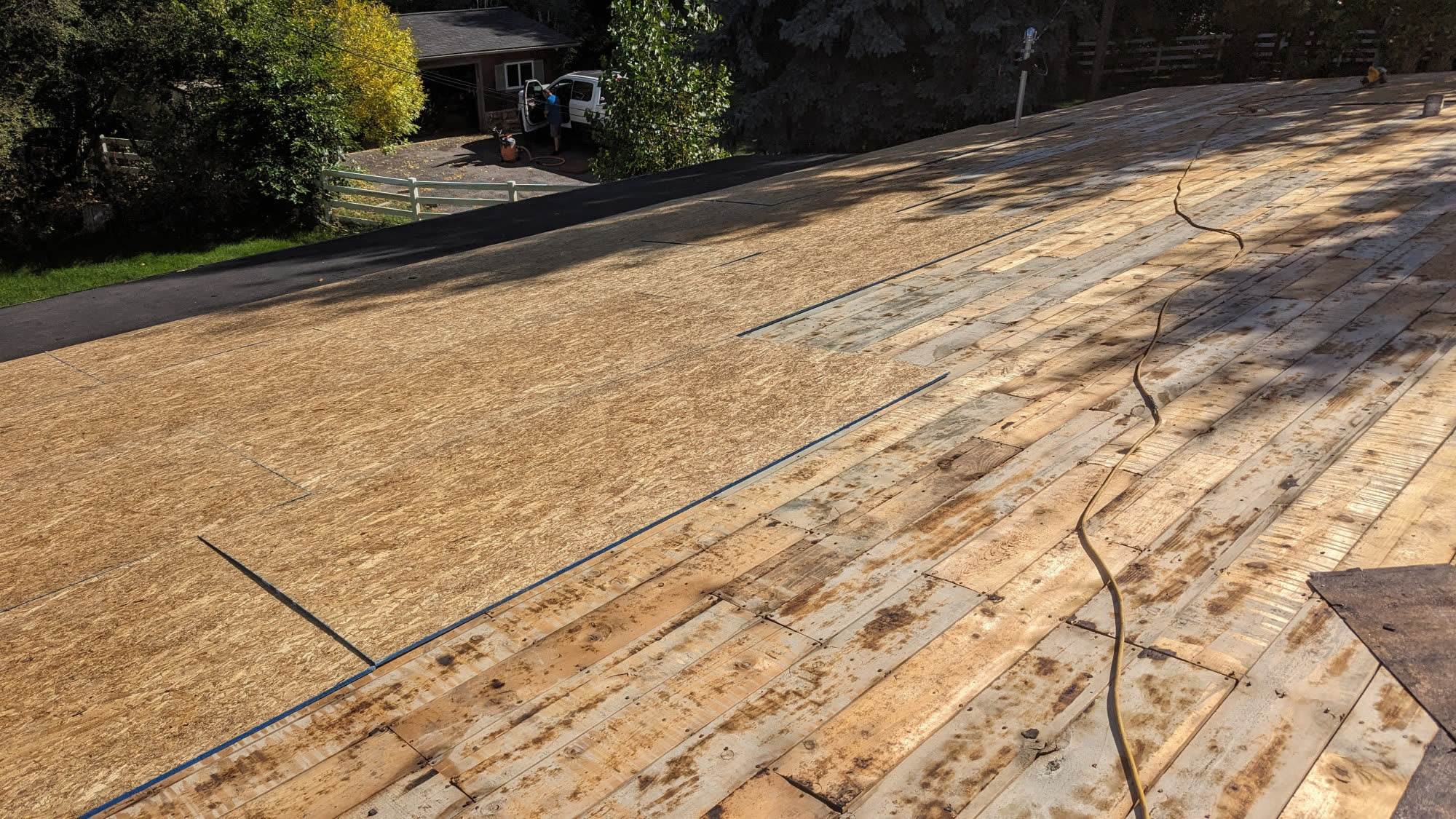
Standing Seam In the Field
Residential and commercial standing seam installs across Colorado, Kansas, Missouri, Nebraska, and Wyoming.
Related Roofing Pages
Other metal categories, hail and insurance pages, and the project case study from Lakewood that demonstrates a 48-square DG Metals snap-lock install start to finish.
Metal Roofing Overview
Standing seam, stone-coated, and R-panel side-by-side. Manufacturers, gauges, costs, and where each system pencils out.
View → Sister ProductStone-Coated Steel
Decra Heritage, Tile XD, Boral Pinnacle — metal performance with shake/tile aesthetic. HOA-friendly.
View → Workhorse MetalR-Panel / Ag-Panel
Exposed-fastener ribbed panels for shops, pole barns, agricultural buildings, budget commercial.
View → CommercialCommercial Metal
Industrial standing seam, structural panels, retail/school/healthcare metal builds.
View → ClaimsInsurance Claims
How we work with carriers and adjusters on hail and wind claims for metal and shingle roofs.
View → Hail InspectionsHail Damage — Denver
Free inspections after Front Range storms. Functional vs. cosmetic damage assessment on metal panels.
View → Hail InspectionsHail Damage — Aurora
E-470 corridor — one of the worst recurring hail belts in the country. Class 4 metal default territory.
View → Asphalt AlternativeClass 4 Shingles — Aurora
If standing seam isn't right for the project, Class 4 impact-rated asphalt is the next-best hail-country option.
View → Project Case StudyLakewood Standing Seam Re-Roof
48-square DG Metals snap-lock in Matte Black. Full re-deck, exhaust relocations, 1-week install.
View → GuideHail Damage on Metal
Cosmetic vs. functional damage, what carriers pay for, how 24-ga steel performs vs. aluminum.
View → GuideAsphalt vs. Metal vs. Tile
Real 30-year cost comparison — replacement frequency, claim deductibles, energy savings.
View → Asphalt PremiumDesigner Shingles
Triple-laminate IKO, CertainTeed, GAF — wood shake and slate looks at asphalt pricing.
View →Get a Free Standing Seam Estimate
We'll walk the property, verify pitch and substrate, pull your insurance declaration page if a claim is involved, and write a real estimate that compares snap-lock vs. mechanically seamed, 24-ga vs. aluminum, and standing seam vs. stone-coated — so you can decide honestly. We bring physical samples of DG Metals, Drexel, and McElroy panels in your color palette to the walk-through. The metal is the easy part. The install is what matters.
What We'll Bring to the Walk-Through
- Physical panel samples — DG Metals snap-lock, Drexel mech-lock, McElroy Maxima
- PVDF color decks from Sherwin-Williams, PPG, and Valspar
- Itemized estimate with snap-lock vs. mechanically seamed pricing
- Insurance scope review if a hail or wind claim is involved
- HOA ARC submittal package if your community requires one
- Snow retention recommendations on mountain and steep-pitch homes
- UL 2218 and UL 580 certificates for the spec'd profile