- Call Us Today! 855 ROOF-001
- Email: info [at] RoofTechnologies.com

Tile Roofing at the Community & Commercial Scale
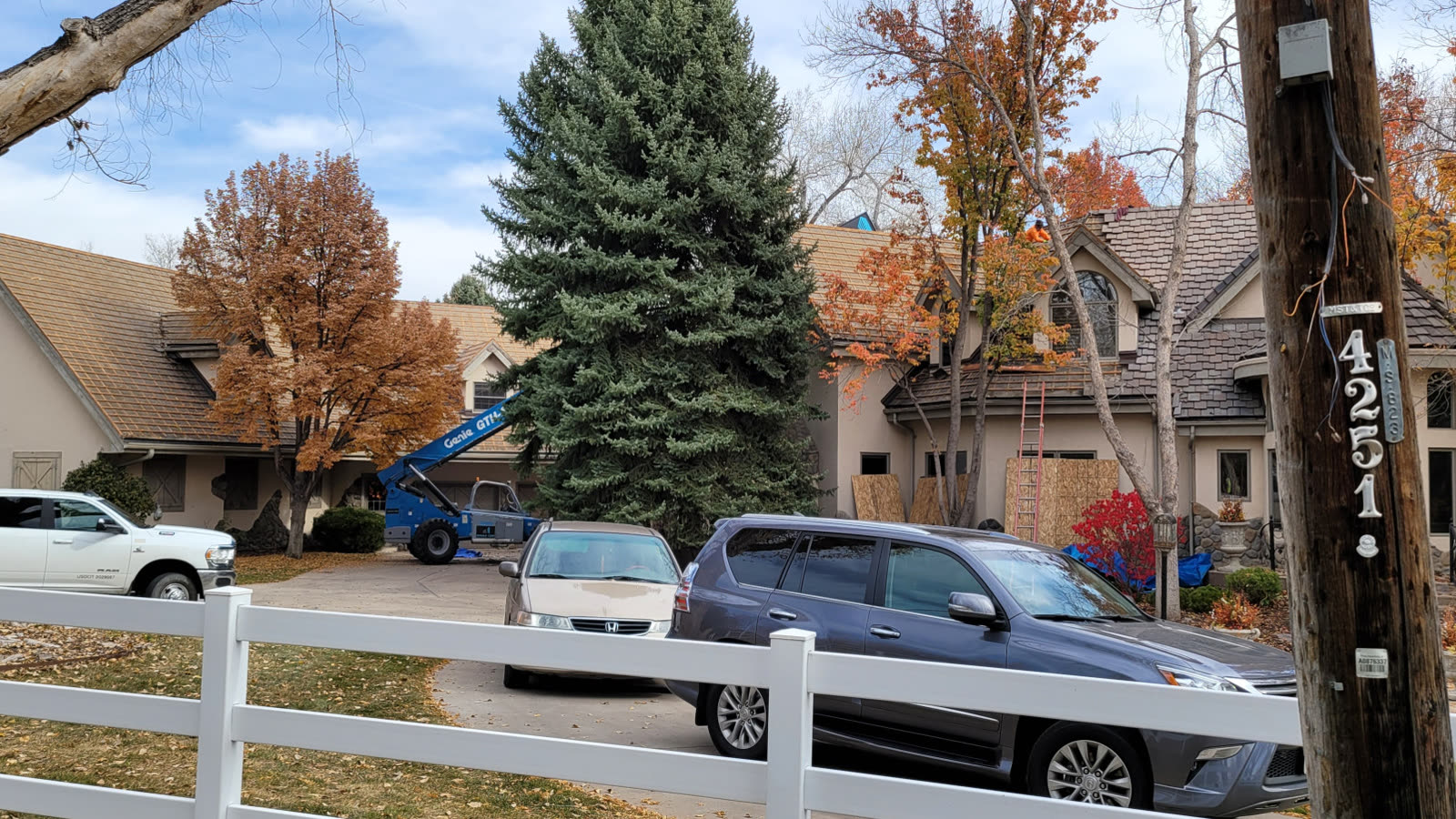
Commercial tile work is different from residential in two important ways: the scale is larger, and the most common service isn’t new tile installation — it’s re-underlayment of existing tile on 20- to 40-year-old multi-family and HOA communities where the tile is still sound but the felt underneath has failed. Colorado Front Range and Kansas City metro HOAs built in the 1980s and 1990s often have hundreds of tile buildings hitting this service window at the same time, and the phased replacement work can run for years. We scope, phase, and execute these programs for HOA boards, property managers, and institutional owners.
Where Commercial Tile Shows Up
- Multi-family HOA communities — townhome and condo communities from the 80s and 90s built with concrete or clay tile. Usually 40 to 300+ units across many buildings, all roughly the same age, all hitting re-underlayment window together.
- Resort and hospitality properties — ski lodges, mountain hotels, destination resorts where the aesthetic is a business asset and metal or membrane doesn’t fit the brand.
- Mediterranean-style office parks — Spanish-mission and Mediterranean architecture on office complexes, medical campuses, and mixed-use developments.
- Historic commercial buildings — original tile that needs preservation-compliant restoration rather than replacement.
- High-end mixed-use — ground-floor retail with residential above, often tile-spec’d for the retail street appeal.
- Institutional and religious buildings — churches, synagogues, private schools, cultural institutions with tile original to the building.
Tile Systems We Install
- Westlake Royal Concrete Tile. The largest concrete tile manufacturer in the U.S. Flat, low-profile, and s-tile (barrel) profiles in the full commercial color range, class-4 impact, class-A fire, 150+ mph wind. Our default concrete tile for multi-family and commercial Colorado, Kansas, Missouri, Nebraska, and Wyoming work.
- Bartile Clay Tile. Utah-manufactured clay tile for high-end resort, hospitality, and premium commercial where the real-clay aesthetic matters. Lighter than concrete, color is baked through the body so UV fade is minimal.
- Clay S-Tile and Barrel Tile. The classic Spanish-mission profile. Commercial applications include hotel, restaurant, and Mediterranean office parks. Mortar-set on flat deck, or mechanically-fastened with clips on steeper applications.
- Flat and Low-Profile Concrete. Modern commercial aesthetic with concrete tile durability. Strong fit for contemporary and transitional commercial architecture.
The Core Commercial Service: Re-Underlayment
This is most of what we do on commercial tile. The tile itself lasts 75 to 100+ years. The felt or synthetic underlayment beneath it lasts 25 to 40 years. Most 1980s and 1990s multi-family tile communities are right in that failure window now. Signs a community needs re-underlayment:
- Scattered interior leak calls that keep coming back after spot repair.
- Staining at eave soffits, even when gutters are working.
- Attic inspections showing active water staining at deck underside.
- Failed underlayment visible at ridge, hip, and penetration pull-backs.
- Original construction documents showing 30 lb felt underlayment (vs. modern synthetic), which is at end of service life.
The re-underlayment scope is exactly that: pull the tile, re-underlay with modern ice-and-water shield plus high-temp synthetic, reset the original tile. Broken tile encountered during the reset gets replaced with matched tile from the same color run. Cost is roughly half of tearing off and buying all-new tile, and the service-life reset is 30+ years.
Structural Capacity Is Non-Negotiable
Tile is heavy. Concrete tile is 900 to 1,100 pounds per square; clay is 600 to 800. On commercial work, before we install new tile over a structure that didn’t originally have it, a structural engineer verifies capacity and stamps drawings. This is not an optional step. We’ve seen too many tile-over-asphalt conversion jobs that sagged ridge lines and cracked interior drywall within the first year. Re-underlayment scope on existing tile structures already carrying tile doesn’t need the engineer check since the load isn’t changing.
HOA and Multi-Family Phasing
A 40- to 300-unit community can’t absorb a full community-wide re-underlayment as a single-year special assessment. We structure phased programs that match the board’s budget and reserve picture:
- Building-condition-ranked prioritization — worst buildings go first. We walk every building and rank them before phasing decisions.
- 20–33 percent per year over 3–5 years — typical phasing cadence that balances assessment shock against escalation risk.
- Locked pricing on early phases, estimated escalation on later phases, transparent about what’s firm and what’s not.
- Resident communication package — schedule notices, work-area staging plans, and a single point-of-contact for resident concerns during each phase.
- Reserve-study integration — program designed to align with your reserve study assumptions rather than fight them.
Hail, Wind, and Insurance on Commercial Tile
Concrete and clay tile carry the highest available impact and fire ratings. Catastrophic hail can still crack tiles, and when it does we replace the cracked tiles individually rather than replacing the whole community. Most hail claims on commercial tile roofs are actually underlayment damage from water that found its way past cracked tiles, not tile failure itself. We document cracks per building, match tile to original color run, reset with matching mortar or clips, and handle the carrier coordination.
Battens, Fasteners, and Commercial Wind Uplift
Commercial tile installation follows a higher fastener schedule than residential because the wind zones are more consequential. Typical commercial spec: horizontal battens (or counter-battens where drainage demands), every tile mechanically fastened (not just nose-hooked), stainless or hot-dipped galvanized fasteners, nose clips per the high-wind attachment schedule, reinforced ridge and hip attachments. We follow the specific manufacturer spec for your wind zone — not the builder-grade shortcut that fails the first chinook.
Repair, Partial Replacement, & Salvage Matching
- Cracked or broken tile replacement — matched tile sourcing (color-run matched, not just color-matched), walking discipline to avoid further breakage during repair.
- Valley and flashing replacement — valleys typically fail before field tile; we pull and re-set tile to access, replace flashing, and re-set.
- Full re-underlayment with existing tile reuse — the core commercial service, extends the system 30+ years at roughly half the cost of all-new tile.
- Salvage tile sourcing — we maintain relationships with regional salvage yards and demolition contractors for discontinued tile profiles and older color runs.
- Ridge and hip remortar and re-fasten after wind events.
Schedule a Commercial Tile Assessment
If you manage a tile-roofed HOA community, resort property, historic commercial building, or Mediterranean-style office park, we’ll walk the buildings, assess underlayment condition, and produce a written scope with phased options that match your reserve budget.
Call 855 ROOF-001, email info [at] rooftechnologies.com, or submit a request through our contact form to schedule a commercial tile roofing assessment.
Still have questions? Contact us
Commercial Tile Roofing FAQ
Common questions about commercial concrete and clay tile roofing, multi-family re-underlayment, and phased HOA tile replacement programs.