- Call Us Today! 855 ROOF-001
- Email: info [at] RoofTechnologies.com

The Smaller Jobs That Keep the Rest of the Roof Working
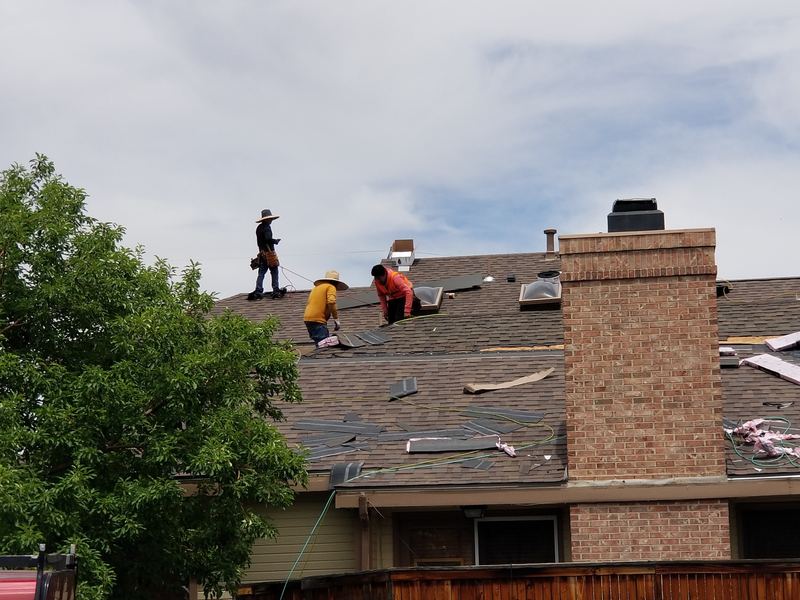
Not every roofing call is a full replacement. A lot of what we do is the small, specific work that keeps a sound roof sound — the ridge vent that wasn’t installed properly, the chimney flashing that’s been leaking for two springs, the ice dam that’s rotting out the fascia, the skylight that needs re-flashing before the next hailstorm, the window screens that didn’t survive the last one. This page covers the ancillary services we do every week that don’t quite fit under the main roof or siding category.
Attic & Roof Ventilation
Under-ventilated attics are the single most common reason asphalt shingle roofs fail early. Trapped heat cooks the underside of the decking and the back of the shingles, premature granule loss follows, and manufacturer warranties quietly void because ventilation spec wasn’t met on the original install. We correct ventilation as a standalone service and as part of every re-roof scope.
- Ridge vents — continuous low-profile vents that run the full length of the ridge, paired with adequate soffit intake. The industry standard for modern balanced ventilation.
- Soffit vents — continuous-strip or individual soffit vents to deliver intake airflow. Most failed ventilation systems are actually failed intake, not failed exhaust.
- Power attic fans and solar attic fans — thermostatically controlled active ventilation where passive ridge/soffit balance isn’t enough, or where the attic geometry doesn’t support a continuous ridge vent.
- Static box vents and turbine vents — traditional passive exhaust, still appropriate on some roof geometries where a ridge vent won’t work.
- Balanced ventilation audit — we measure net free area in and out, calculate the 1:150 or 1:300 ratio required for your assembly, and tell you where the bottleneck actually is.
Skylight Installation & Repair
A leaking skylight is almost never a skylight problem — it’s a flashing problem. We install and re-flash Velux and Wasco skylights, the two dominant manufacturers in the residential market.
- Deck-mounted vs. curb-mounted — deck-mounted is cleaner looking and thinner profile; curb-mounted is more forgiving on low-slope roofs and easier to flash in retrofit situations.
- Manufacturer flashing kits — we install with the matched flashing kit for the specific skylight model, not a field-fabricated assembly that voids the warranty.
- Impact-rated glass — for Colorado hail country we upgrade to impact-resistant laminated glass rather than standard tempered. The up-charge is small; the claim avoidance is real.
- Skylight replacement during re-roof — any skylight older than roughly 20 years should be replaced when the surrounding roof is replaced. Pulling a 22-year-old skylight and reinstalling it under a brand-new roof is a leak looking for a date.
- Solar tubes and sun tunnels — we install Velux Sun Tunnels and similar tubular daylight products where a full skylight isn’t practical.
Chimney Flashing & Counter-Flashing
Chimney flashing is the single most common roof leak we diagnose. The counter-flashing was never cut into the brick properly, the step flashing rusted through, the cricket (the small ridge that sheds water around the up-slope side of the chimney) was never built at all. We fix it.
- Step flashing and counter-flashing replacement — reglet-cut into the masonry with the counter-flashing let in and sealed, not just surface-caulked to the brick where every freeze-thaw cycle pulls it loose.
- Saddle / cricket installation — for chimneys wider than about 30 inches on the up-slope side, code and good practice require a cricket to divert water. Many older homes don’t have one. We can retrofit.
- Chimney cap, crown, and flue seal work — we coordinate with masonry subs where the brick or crown itself is failing. The roof work doesn’t stick to a crumbling chimney.
- Lead, copper, or pre-painted steel flashing — sized to the chimney and the roof material. Copper on slate, pre-painted steel on asphalt, lead where the masonry justifies it.
Ice Dam Prevention & Heat Cable
Ice dams are a Colorado Front Range specialty. Snow melts on the warm part of the roof, runs down to the cold eave, refreezes, backs up under the shingles, and leaks into the soffit and living space. Prevention is a three-part problem: ventilation, insulation, and, where the first two aren’t enough, heat cable.
- Self-regulating heat cable installation — constant-wattage or self-regulating cables routed along eaves, valleys, and downspouts in a zig-zag pattern. We use proper roof clips, not aluminum tape that fails at the first thaw.
- Heated valley pans and gutter heat — for homes with chronic valley ice-dam issues, dedicated valley and gutter heating integrated with the roof replacement.
- Ice-and-water shield extension — if we’re already on the roof for a related scope, extending the ice-and-water underlayment up from the eave is often the right prevention investment.
- Attic insulation and ventilation review — heat cable treats symptoms. The real cure is insulation and ventilation that keeps the roof deck cold. We walk through the whole picture.
Gutter Guards
Gutter guards reduce — not eliminate — the need to clean gutters. They’re a worthwhile upgrade when the right guard is matched to the right tree load. We install and service LeafFilter-style micro-mesh, Gutter Helmet-style surface-tension covers, and traditional screen-style guards.
- Stainless micro-mesh guards — the most effective category for fine debris like pine needles and maple seeds. More expensive; best performance.
- Surface-tension / reverse-curve guards — Gutter Helmet, LeafGuard, and similar. Good in heavy leaf loads, less effective in extreme storm events where water overshoots.
- Screen and foam inserts — the budget category. Decent for light leaf areas, and easy to retrofit onto existing gutters.
- Ice-zone considerations — in Colorado ice conditions, some guard designs make ice dams worse by trapping meltwater. We’ll tell you which profile fits your exposure.
Window Screen Replacement
Window screens are one of the highest-volume small services we handle. After a hail event, 20 to 50 window screens on a single home can end up shredded. We rebuild and replace screens as a standalone service and as part of insurance claim scopes, matching frame color, mesh gauge, and screen type to what was there originally.
- Full screen rebuilds — new frame, new fiberglass or aluminum mesh, new spline, matched to the existing window opening.
- Re-mesh on existing frames — if the frame is sound, we pull the spline and re-mesh in place. Cheaper and usually turn-around-same-day.
- Solar / sun-screen upgrade — denser weave that blocks 70 to 90 percent of solar heat gain. Worth considering on west- and south-facing windows in Colorado, Kansas, Missouri, Nebraska, and Wyoming summer.
- Pet-resistant mesh — heavier vinyl-coated polyester that stands up to dogs and cats far better than standard fiberglass.
- Sliding patio door screens — usually the most damaged, usually the most annoying to replace, and we do a lot of them.
Real Estate Roof Certifications & Pre-Sale Inspections
When a home is under contract, the buyer’s lender or inspector often asks for a signed roof certification before closing. Insurers sometimes require a 4-point inspection (roof, electrical, plumbing, HVAC) for older homes before binding a policy. We perform these as a fast, paid scope, documented on the form the lender or carrier needs.
- Pre-sale roof certification — typical form states remaining service life estimate, current condition, repairs needed to pass, and a signed professional opinion. Usually turns around in 48 hours of site visit.
- 4-point inspection (roof component) — we complete the roof section of the industry-standard 4-point inspection form for the insurance carrier.
- Pre-listing condition reports — sellers wanting to price accurately and avoid surprise buyer objections can commission a clean walk-through and written report before listing.
- Buyer-side second opinion — after a general home inspection flags the roof, we can give a roofer’s actual read on whether the call-out is a dealbreaker, a negotiating item, or a non-issue.
Other Small Roof Services
- Vent pipe boot replacement — the rubber collars around plumbing vent stacks crack and leak in 8 to 12 years. We replace with lead or high-temp silicone boots that last as long as the roof.
- Satellite dish removal and reinstall — pulling and properly flashing dish mounts during re-roofs, or removing abandoned dishes and sealing the holes correctly.
- Moss and algae treatment — soft-wash treatment on shaded north-facing slopes before it eats into the shingle surface.
- Animal-entry sealing — squirrel, raccoon, and bird entries into the attic through soffit, gable-vent, or ridge failures. Sealed with matching hardware cloth and repaired flashing.
- Post-storm documentation walks — a walk-through with photos and notes formatted for insurance even if no immediate repair is scheduled, so if damage surfaces later the evidence is preserved.
Schedule a Service Call
Most of these jobs are half-day or one-day scopes, usually billed at time and materials rather than large-project pricing. If you’re looking at one of them, we’ll walk you through what’s actually needed vs. what can wait.
Call us at 855 ROOF-001, email info [at] rooftechnologies.com, or submit a request through our contact form to schedule a service visit.
Still have questions? Contact us
Additional Services FAQ
Common questions about ventilation, skylights, chimney flashing, ice dam prevention, gutter guards, window screens, and real estate roof certifications.