- Call Us Today! 855 ROOF-001
- Email: info [at] RoofTechnologies.com

Decks Built to Outlast the Seasons
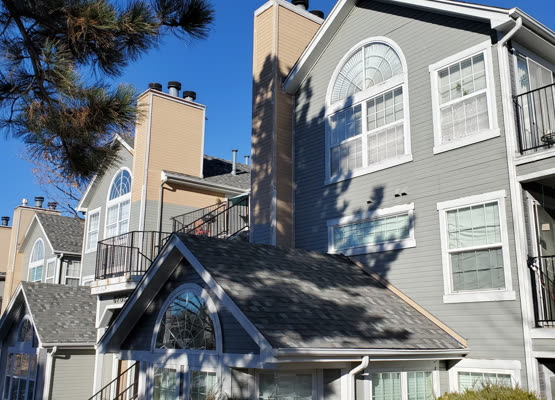
A deck in Colorado or Kansas takes a beating — intense UV all summer, freeze-thaw all winter, and snow load a few times a year. We build new decks, refinish tired ones, and rebuild the structural parts that decades of sun and snow have quietly destroyed. The framing under an old deck is usually where the real story is, and that is where we pay the most attention.
Decking Materials
The material you choose locks in how much you will spend on the deck over the next 25 years. Up-front cost is only part of it.
- Pressure-treated pine. Lowest up-front cost, expect to stain or seal every 2–3 years to keep it from graying and checking. Good choice when budget is the main driver.
- Western red cedar. Beautiful, naturally rot-resistant, still wants a maintenance cycle. Ages gracefully if you stay on top of sealing.
- Composite (Trex, TimberTech, and similar). Capped composite boards shed water, resist fading, and do not splinter. Most of our new builds end up here because the math works out over the life of the deck.
- PVC (Azek and similar). Fully synthetic, lightest weight, strongest stain and scratch resistance. The premium option, and worth it on heavily-used decks or where color stability matters.
Railings
Railings are code-driven and view-driven. We build to the current IRC spec — 36" minimum on residential, proper baluster spacing, graspable handrails on stairs — and match the material to what you want to see through.
- Wood railings in cedar or matched to the decking for a unified look.
- Cable railings for mountain views and open sightlines. Stainless cable, aluminum or wood posts, properly tensioned.
- Aluminum railings powder-coated in black, bronze, or white. Low-maintenance and clean-looking.
- Glass panel railings where the view is the whole point.
Refinishing Tired Decks
Most wood decks we see have good bones and bad surfaces. A proper refinish strips the old failing stain, sands out the UV-damaged fiber, and lays down a stain built for high-altitude sun. Done right, you get another 3–5 years before the next cycle.
- Strip and sand. Chemical stripping or aggressive sanding depending on the existing finish and the wood condition.
- Board replacement. We swap out the split, cupped, or rotted boards so the whole surface takes stain evenly.
- High-solids stain or sealer chosen for UV resistance. We avoid the film-forming products that peel a year in.
Structural Repair
Old decks hide problems where you cannot see them. Ledger boards bolted wrong, posts buried in dirt and rotting, joists notched around a beam. Before we put a new surface on anything, we pull boards, look at the frame, and fix what needs fixing.
- Ledger board flashing and fasteners. The single most common cause of deck collapse. We flash properly and bolt with through-bolts or structural screws rated for the load.
- Post and footing repair. Rotted posts cut back to sound wood, new post bases above grade, footings checked for frost depth.
- Joist replacement and sistering where rot or splitting has compromised the frame.
Schedule a Deck Estimate
Whether you want a new deck, a refinish on the one you have, or a structural evaluation before you put another dollar into it, we will come out, measure, and give you a straight answer on what it needs.
Call us at 855 ROOF-001, email info [at] rooftechnologies.com, or submit a request through our contact form to schedule a deck site visit.
Still have questions? Contact us
Deck Construction & Refinishing FAQ
Common questions about deck construction, materials, permits, and refinishing in Colorado, Kansas, Missouri, Nebraska, and Wyoming.