- Call Us Today! 855 ROOF-001
- Email: info [at] RoofTechnologies.com

The Workhorse Metal Panel — Done Right, It Lasts
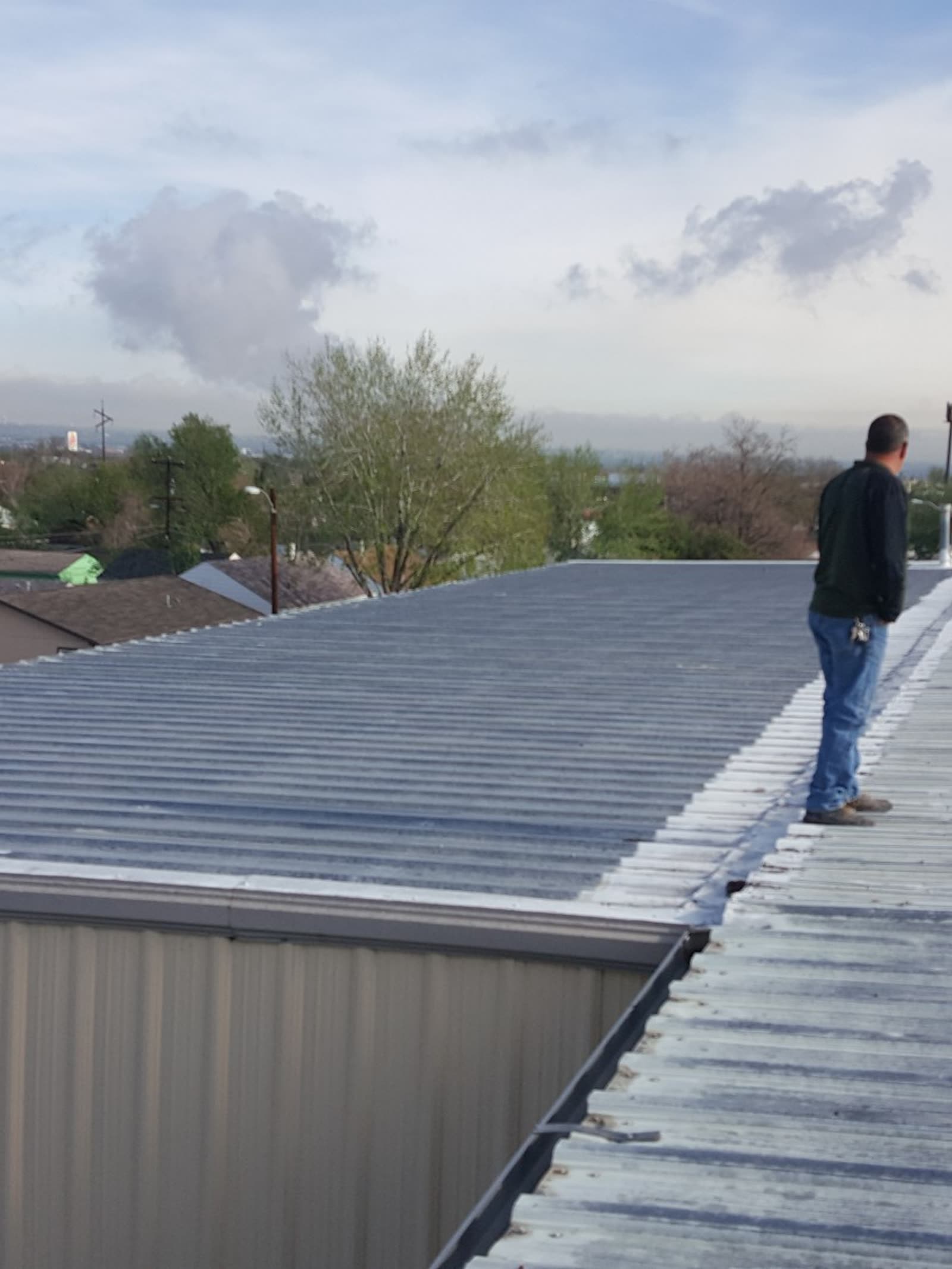
R-panel and ag-panel are the workhorse of American commercial and agricultural roofing. Ribbed panels in 26 or 29 gauge, fastened through the face with neoprene-washered screws. It’s cheaper per square foot than standing seam by 40 to 60 percent, installs fast, and covers a lot of square footage in a single day. Done right, with the right gauge and the right fastener schedule, R-panel delivers 30 to 50 years. Done wrong, fasteners back out in 15 and the leaks start at every screw head.
Ag Panel vs. R Panel: What’s the Difference?
Short answer: both are exposed-fastener ribbed steel panels with roughly 36 inches of coverage. R panel has taller, wider-spaced ribs and is the standard commercial panel. Ag panel has lower ribs set closer together, is usually rolled in lighter 29 gauge, and costs less — which is why it shows up on pole barns and outbuildings. The differences matter on the jobsite:
- R Panel: Typical commercial profile with major ribs at 12” on center and a 36” coverage width. Used on warehouses, light industrial, shop buildings, and commercial outbuildings.
- Ag Panel / Pro-Panel: Very similar profile with slightly different rib geometry, designed for agricultural service buildings, pole barns, equipment shelters, and outbuildings. Lower cost, wider color range, more typical in 29 gauge than 26.
Both share the same failure mode: fastener maintenance. The neoprene washers flatten, the screws back out, and the leaks start at the field. Plan on a re-torque or fastener-replacement cycle every 15 to 20 years, or expect to shorten the service life.
| R Panel | Ag Panel | |
|---|---|---|
| Rib profile | Taller major ribs (typically about 1-1/4″) at 12″ on center | Lower ribs (typically about 3/4″) set closer together |
| Coverage width | 36″ | Typically 36″ |
| Common gauge | 26 gauge (our default in hail country); 24 gauge available | 29 gauge most common; 26 gauge available |
| Typical buildings | Warehouses, light industrial, shops, commercial outbuildings | Pole barns, equipment shelters, agricultural buildings, outbuildings |
| Cost | Higher than ag panel | Lower cost, wider color range |
| Fasteners | Exposed screws with sealing washers on both — plan a re-torque or replacement cycle every 15 to 20 years | |
Exact rib dimensions vary by manufacturer, so we confirm the profile before ordering trim and closures. Taller ribs carry more water, which is one reason R panel is the usual commercial choice — always check the manufacturer’s minimum slope for the panel you pick.
Which One Should You Use?
For a protected outbuilding where budget leads and cosmetic hail dents are acceptable, ag panel is a reasonable choice. For commercial buildings, and for any building on the Front Range, the Kansas plains, or in eastern Nebraska where hail is routine, we default to 26-gauge — and R panel is the usual profile. On metal-building plants and warehouses, R panel is typically part of a broader industrial roofing scope.
Gauge Matters — Especially in Hail Country
- 29 gauge: Lightest weight, cheapest, fastest to install. Prone to denting from heavy hail on open elevations. Fine for protected locations and outbuildings where cosmetics are not primary.
- 26 gauge: Our default for commercial and anywhere on the Front Range, Kansas plains, or eastern Nebraska where hail is routine. Holds up to Class 4 impact when the profile is tested.
- 24 gauge: Available in R-panel for owners who want the warehouse panel aesthetic with standing-seam-grade durability. Rare, expensive, but legitimate.
Fasteners, Flashings, and the Details That Decide 15 vs. 40 Years
The panel does not fail. The penetrations, eaves, and fastener heads fail. We install:
- Self-drilling screws with EPDM-bonded washers (not the cheap neoprene that comes with bargain-kit panels). EPDM washers hold their compression longer.
- Fastener schedule per manufacturer spec — typically 24 inches on center at the rib valleys. Overdriving crushes the washer and starts leaks on day one.
- Closure strips, ridge caps, gable trim, and eave flashings matched to the panel profile. Generic trim does not seal to the rib geometry — we use the manufacturer’s matched trim package.
- Pipe boots and curb flashings rated for the metal panel rib height. Standard shingle-style boots do not work on metal and will leak every penetration.
Re-roofing an older panel roof is also the time to check what is underneath. On our 300-square R-panel re-roof of a Denver manufacturing facility, the old roof had leaked long enough to soak the insulation, so the scope included full insulation replacement under the new panels. When the panels and insulation are still sound and only the fasteners and seams leak, a silicone commercial roof coating can be an alternative to re-roofing.
Who It’s For
- Pole barns, equipment buildings, shops, and agricultural structures across the Plains.
- Warehouses, distribution centers, and low-cost commercial where aesthetic is utilitarian — see warehouse and manufacturing roofing.
- Outbuildings and secondary structures on residential properties (detached garages, workshops, barns).
- Agricultural service buildings in Kansas, Nebraska, and eastern Colorado.
- Any re-roof where the budget can’t support standing seam but the owner wants 30+ years of service life.
Expect to pay roughly 40 to 60 percent less per square foot than standing seam. Expect fastener maintenance. Tell us the building and we’ll tell you honestly whether R-panel is the right call or whether a small premium into standing seam or TPO makes more sense.
Schedule an R Panel Estimate
If you’re planning a new metal roof on a pole barn, shop, warehouse, ag building, or outbuilding — or a re-roof over an existing exposed-fastener panel roof — we’ll walk the structure, verify framing and purlin spacing, and write an itemized estimate.
Call us at 855 ROOF-001, email info [at] rooftechnologies.com, or submit a request through our contact form to schedule an R panel roofing estimate.
Still have questions? Contact us
R Panel & Ag Panel FAQ
Common questions about R-panel and ag-panel exposed-fastener metal roofing.