- Call Us Today! 855 ROOF-001
- Email: info [at] RoofTechnologies.com

Metal Roofing — 40 to 70 Year Service Life, Class 4 in Hail Country
Standing seam, stone-coated steel, R-panel, and specialty metal systems installed across Colorado, Kansas, Missouri, Nebraska, and Wyoming. Kynar 500 PVDF finishes, UL 2218 Class 4 impact, UL 580/1897 Class 90 uplift, Class A fire. The metal is the easy part — the install is what matters.
The Longest-Lived Roofing System Available, Built for the Climate We Work In
A properly installed metal roof will outlast the next two asphalt roofs you would have bought instead. On the Colorado Front Range where hail is recurring, across the Kansas plains where wind uplift drives insurance losses, and up the Wyoming wind belt where 90+ mph gusts are routine, metal is the longest-lived roofing system available for residential and light-commercial use. We install standing seam, stone-coated steel, and exposed-fastener systems — matched to the building, the pitch, and your budget.
We're a Class 4 hail-country contractor by default. The product list below is the metal we actually install across our five-state footprint — not a manufacturer brochure. Every system we sell ships UL 2218 impact-tested, UL 580/1897 wind-uplift tested, and finished in Kynar 500 / Hylar 5000 PVDF coatings with a 35-to-40-year color and chalk/fade warranty backed by Sherwin-Williams, PPG, or Valspar — not the panel manufacturer.
The other thing worth saying up front: a metal roof costs roughly 2 to 3 times the per-square cost of a standard architectural asphalt roof. Over the lifetime of the building, metal almost always wins on dollars-per-year. Over a 7-year hold horizon, asphalt frequently makes more sense. We'll tell you which one your house deserves.
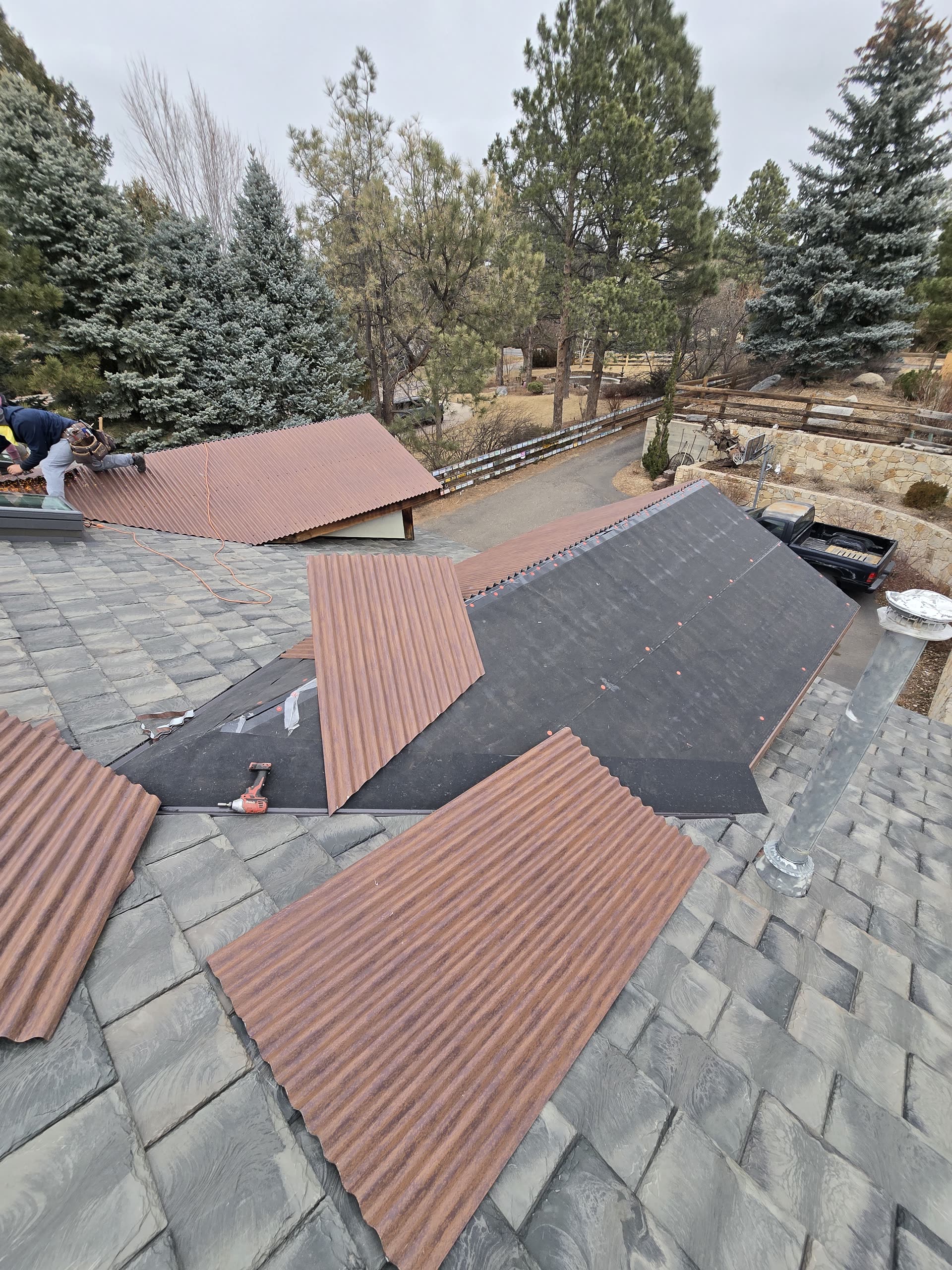
Standing Seam, Stone-Coated Steel, and R-Panel
Each metal category is its own product page on this site — with manufacturers, profiles, gauges, and the exact technical specs we install in our five-state footprint. The summary below is a starting point. Click into the category that fits your project.
Standing Seam
Concealed-fastener vertical panels. The longest-lived metal system — no exposed screws to back out over time.
- Gauge24 ga residential / 22 ga commercial / .032–.040 aluminum
- SeamSnap-lock or mechanically seamed (double-lock)
- FinishKynar 500 / PVDF, 35–40 yr color warranty
- BrandsDG Metals, Drexel, McElroy, Englert, ATAS, Sheffield
- Life40–70 years
- Cost$15–$25 / sq ft installed
Stone-Coated Steel
Pressed steel with a chipped-stone surface that reads as shake, tile, or slate. HOA-friendly metal that hides cosmetic hail.
- Gauge26 ga steel substrate
- ProfileHeritage shake, Tile, Tile XD, Villa, Pinnacle
- FinishAcrylic-bonded chipped stone over Galvalume
- BrandsDecra, Boral / Westlake Royal, Gerard, Westile
- Life40–50 years (50-yr limited lifetime warranty)
- Cost$11–$18 / sq ft installed
R-Panel / Ag-Panel
Ribbed exposed-fastener panels. The workhorse for shops, pole barns, agricultural buildings, and budget commercial.
- Gauge26 ga (hail country default) / 29 ga / 24 ga premium
- ProfileR-panel, Pro-Panel, Ag-Panel, corrugated
- FinishSMP or PVDF, 35–40 yr color depending on tier
- FastenerSelf-drilling EPDM-washered screws (face-fastened)
- Life30–50 years with 15–20 yr fastener cycles
- Cost$6–$11 / sq ft installed
The Metal We Stock and the Mills We Buy From
This is the actual list of metal manufacturers Roof Technologies installs across Colorado, Kansas, Missouri, Nebraska, and Wyoming. Every one is a real coil supplier or panel mill — not a re-branded distributor relationship. We buy direct, fabricate panels on rollformers we own where the geometry calls for it, and stock matching trim, closure, and pipe-boot packages for each system.
Class 4 Metal — The Hail Country Default
UL 2218 Class 4 is the highest impact rating available to roofing materials, tested against a two-inch steel ball dropped from twenty feet. Most carriers in CO, KS, MO, NE, and WY discount the wind/hail portion of premium by 15–35% when a Class 4 roof is installed — which on a typical $4,000–$6,000 annual policy is $500–$1,500 per year back. On metal, Class 4 is the rule, not the exception.
Stone-coated steel from Decra and Boral is Class 4 across nearly the entire product line. 24-gauge and heavier standing seam in tested profiles passes Class 4 with the right substrate. 26-gauge R-panel passes when the rib geometry has been independently tested. The note we add: Class 4 is a panel rating, not an installation rating — the install detail is what decides whether the rated panel actually performs.
What Hail Actually Does to Each Metal Type
This is the conversation we have on every metal estimate in hail country, because it is not the same answer for every system. Hail damage on metal is usually cosmetic, not functional — the panel keeps shedding water — but cosmetics matter to insurance, to HOAs, and to anyone planning to sell the house.
Standing seam: 24-gauge will show ding marks from severe hail (1.75″+). The panel still performs — but the cosmetic dings are visible from the ground and the carrier may or may not pay for cosmetic-only damage. 22-gauge or aluminum reduces visible denting. Reference our blog: cosmetic vs. functional hail damage on metal.
Stone-coated steel: The chipped-stone texture hides nearly all cosmetic dings. Owners who live through repeated hail seasons often switch to stone-coated specifically for this reason. Decra and Boral both warrant the panel through severe hail, and the substrate keeps performing for 40+ years even after multiple events.
R-panel: 26-gauge in tested profiles passes Class 4. 29-gauge will visibly dent in moderate hail and is best reserved for outbuildings where cosmetics are not primary.
Read: Hail Damage on Metal — Cosmetic vs. FunctionalWhat a Metal Roof Actually Costs
Ranges below assume a 30-square (3,000 sq ft) single-family home with standard pitch, tear-off of one existing layer, synthetic underlayment, ice-and-water shield in valleys/eaves, profile-matched trim and ridge, and full mfr-spec fastener and clip systems. Regional variation ±10%. Complex cuts, steep pitch, full re-deck, or low-slope mechanically seamed sections push toward the top of the range.
- 26 ga or 29 ga ribbed
- Exposed-fastener install
- 30–50 yr life with re-torque
- Best for shops, barns, ag
- Decra Heritage / Tile XD / Boral Pinnacle
- Class 4 standard, hides cosmetic hail
- 50-yr limited lifetime warranty
- HOA-friendly — reads as shake or tile
- 24/22-ga steel or .032–.040 alum
- Concealed clip, snap-lock or mech-lock
- Kynar 500, 35–40 yr color
- 40–70 yr service life
Snow retention systems, custom radius panels, full re-deck (skip-sheath replacement), or specialty colors typically add another $2,000–$8,000 on top of the base ranges. We're a Class 4 hail-country contractor — expect a no-fluff estimate that compares each metal tier against what your insurance carrier will discount and what your HOA will approve.
Metal Pencils Out Here
- Steep architectural slopes — long, simple gable, shed, and ranch profiles where a standing seam panel runs end-to-end without termination.
- Mountain and high-altitude homes that need to shed snow safely and deal with UV-cooked underlayment failures on asphalt.
- Hail-country long-hold homes — Front Range, Eastern CO, Kansas plains, Missouri Western border, Eastern NE. The 50-year horizon math wins clean.
- HOA communities open to stone-coated steel — Decra Tile or Boral Pinnacle reads as concrete tile from the curb.
- Re-roofs after a Class 4 claim where the owner wants the last roof they will ever buy on the house.
- Light-commercial — retail, school, healthcare, municipal, agricultural service buildings.
- Energy-efficiency-focused owners — Englert UltraCool and Energy Star reflective Kynar finishes drop attic temps measurably.
Where Asphalt or Tile Wins
- Heavily cut hip-and-valley suburban roofs with multi-pitch dormers, dead valleys, and complex cuts. The labor cost relative to asphalt or stone-coated balloons.
- Low-slope sections under 3:12 without going to mechanically seamed standing seam — doable, expensive, and TPO/PVC may make more sense.
- Short-hold homes (under 7 years) — the up-front delta over architectural asphalt rarely repays before the sale.
- Tight-budget re-roofs driven by an actual cash check, not a financing horizon.
- HOAs that explicitly ban visible metal — we steer those projects to designer asphalt or synthetic composite.
- Older rafter-framed roofs needing structural review — stone-coated steel solves the weight side, but framing has to be confirmed first.
- Heavy historic-district restorations where the AHJ requires specific traditional materials.
Sub-Products and Related Pages
The three main metal categories each have their own technical product page. Plus the hail damage and insurance pages that matter most for metal in CO/KS/MO/NE/WY.
Standing Seam
Concealed-fastener vertical panels — DG Metals, Drexel, McElroy Maxima, Englert UltraCool. 40–70 yr life.
View → Sub-ProductStone-Coated Steel
Decra Heritage, Tile XD, Shake, Tile. Boral Pinnacle. Gerard. HOA-friendly metal that hides cosmetic hail.
View → Sub-ProductR-Panel / Ag-Panel
Exposed-fastener ribbed panels for shops, pole barns, agricultural buildings, and budget commercial.
View → CommercialCommercial Metal
Industrial standing seam, structural panels, retail/school/healthcare metal builds.
View → ClaimsInsurance Claims
How we work with carriers and adjusters on hail and wind claims for metal and shingle roofs.
View → Hail InspectionsHail Damage — Denver
Free inspections after Front Range storms. Functional vs. cosmetic damage assessment on metal panels.
View → Hail InspectionsHail Damage — Aurora
E-470 corridor hail belt — one of the worst recurring hail zones in the country. Class 4 metal is default here.
View → Asphalt AlternativeClass 4 Shingles — Aurora
If metal isn't right for the project, Class 4 impact-rated asphalt is the next-best hail-country option.
View → Asphalt PremiumDesigner Shingles
Triple-laminate IKO, CertainTeed, GAF designer asphalt — wood shake and slate looks at asphalt pricing.
View → GuideAsphalt vs. Metal vs. Tile
Real 30-year cost comparison — replacement frequency, claim deductibles, energy savings.
View → GuideHail Damage on Metal
Cosmetic vs. functional damage, what carriers pay for, how stone-coated hides dings.
View → Project Case StudyLakewood Standing Seam Re-Roof
48-square DG Metals snap-lock in Matte Black. Full re-deck, exhaust relocations, 1-week install.
View →Metal Roof Installation — Five-State Footprint
Residential and commercial metal roofing across Colorado, Kansas, Missouri, Nebraska, and Wyoming.
Get a Free Metal Roof Estimate
We'll walk the property, verify pitch and substrate, pull your insurance declaration page if there's a claim involved, and write a real estimate that compares standing seam, stone-coated, and asphalt side-by-side — so you can decide honestly. The metal is the easy part. The install is what matters, and we'll show you exactly what we install before you sign anything.
What We'll Bring to the Walk-Through
- Physical samples — DG Metals snap-lock, Drexel mech-lock, Decra Heritage, Boral Pinnacle
- PVDF color decks from Sherwin-Williams and PPG
- Itemized estimate with metal vs. asphalt comparison
- Insurance scope review if a claim is involved
- HOA ARC submittal package if your community requires one
- Snow retention recommendations for mountain and steep-pitch homes
- Lead time and install window with no-pressure follow-up
The Metal Roofing Systems We Install
We’d rather you check the facts than take our word for it. Product pages, spec/data sheets, and warranty terms straight from the manufacturers we’re authorized to install:
- DECRA Stone-Coated SteelPanel profiles, wind and impact ratings, and warranty terms — decra.com
- Westlake Royal Designer MetalsStone-coated steel tile and shake profile data — westlakeroyalbuildingproducts.com
- All Manufacturer CertificationsEvery roofing brand and credential tier Roof Technologies holds
Manufacturer names and logos are the property of their respective owners. These independent sites are linked for reference so you can confirm product specifications and warranty terms at the source.