
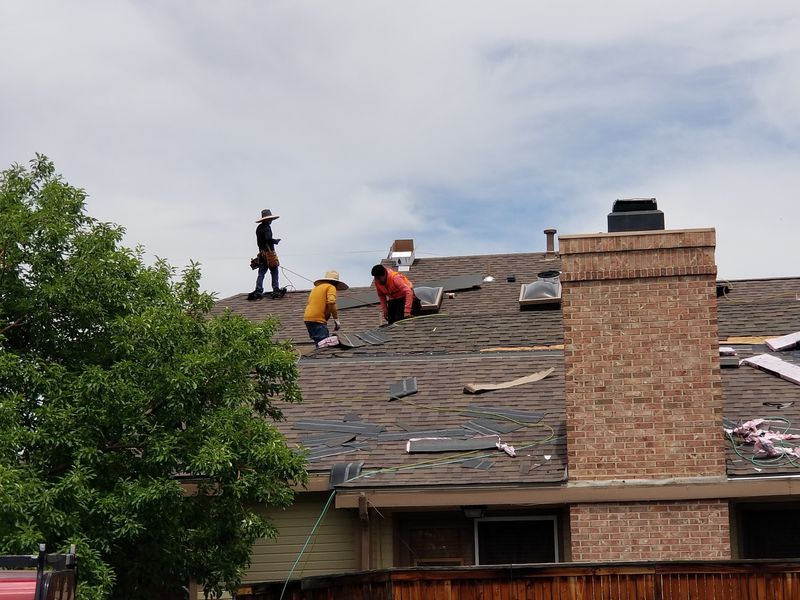
On December 30, 2021, the Marshall Fire swept across 6,026 acres of grassland and suburb in a single afternoon. Driven by hurricane-force winds out of the foothills, the fire destroyed 1,084 homes, damaged 7 schools, and killed two people. It remains the most destructive wildfire in Colorado history, and the only major urban-interface fire in the state that leveled entire subdivisions rather than isolated mountain cabins.
Three years later, rebuild is still active. Homeowners are still recovering depreciation holdbacks, the building code has changed in ways that affect every re-roof in the burn scar, insurance carriers have shifted their appetite in Boulder County, and some lots still sit empty. Here is a status update from the field as the fourth rebuild season gets underway.
The Numbers and the Three Jurisdictions
The Marshall Fire crossed three separate jurisdictional lines, which is one of the reasons the rebuild has been uneven. Each jurisdiction runs its own building department with its own post-fire code amendments and plan-review timelines.
- Town of Superior — roughly 800 homes destroyed, the epicenter of the loss. Rock Creek, Sagamore, Saddle Brook, and Heatherwood were hit hardest.
- City of Louisville — roughly 500 homes destroyed, concentrated in Centennial Valley, Hillsborough, and the Enclave.
- Unincorporated Boulder County — approximately 100 homes, scattered along the interface between Superior, Louisville, and the open grasslands to the east.
As of early 2026, roughly 85 to 90 percent of destroyed lots have pulled a rebuild permit, and approximately 70 to 75 percent have reached a completed-construction status. A minority of lots changed hands, were consolidated, or remain unbuilt while owners work through insurance, title, or personal decisions about whether to return.
What the WUI Code Change Means for Rebuilds and Nearby Re-Roofs
After the fire, all three jurisdictions expanded their Wildland-Urban Interface (WUI) zone mapping and adopted or strengthened ignition-resistant construction requirements. The effect has reached far beyond the burn footprint itself. Homes that did not burn but sit in the expanded WUI zone now trigger WUI requirements when they re-roof.
A typical rebuild or re-roof in the current Boulder County WUI zone will need:
- Class A fire-rated roof assembly tested under UL 790 or ASTM E108. The entire assembly matters — it is not just the shingle rating but also the underlayment and deck specification.
- Ember-resistant attic and crawlspace venting tested under ASTM E2886. Brandguard, Vulcan, and O'Hagin are the three most common approved products.
- Ignition-resistant soffit materials — fiber cement, metal, or rated wood alternatives.
- Non-combustible gutters in some zones, typically steel or aluminum with metal gutter guards in lieu of plastic mesh.
- Solar-ready decks — the post-Marshall code amendments coincided with Colorado's statewide solar-ready update, so rebuilds in all three jurisdictions now require the structural and conduit pathway for future solar.
If your home sits in the expanded WUI zone and did not burn, a re-roof is still a good time to upgrade the venting and soffit details, because the code will require it anyway and because an ember attack will find the weak point whether or not the roof deck is Class A.
Insurance Carrier Landscape in Boulder County Today
The carrier map for Boulder County has shifted since the fire, and the shift is not over. Some national carriers tightened new-business underwriting in the Front Range foothills — State Farm reduced new writes in certain Boulder ZIP codes, and Allstate followed a similar path. At the same time, carriers with California wildfire experience expanded their Colorado appetite: Travelers, Chubb, and USAA have all been more active on rebuilds and higher-value homes.
A counter-intuitive result: a post-rebuild home often underwrites better than an un-updated neighbor. Because the new home carries Class A assembly, ember-resistant venting, and ignition-resistant detailing, the premium differential we see on a typical post-rebuild home runs 15 to 25 percent lower on the combined wind, hail, and fire exposure than pre-fire housing stock of the same size and replacement cost.
Ongoing Supplement Work
Marshall Fire claims are not closed. Many homeowners are still working through:
- Depreciation holdback recovery — typically held by the carrier for 12 to 24 months post-completion, sometimes longer if the rebuild is drawn out in phases.
- Code-upgrade supplements — the WUI and solar-ready requirements were not always fully scoped in the initial loss estimate, which means a supplement submitted during construction to recover the cost.
- Scope misses discovered during rebuild — step flashing at the new siding, upgraded ventilation to meet current code, ice-and-water barrier at eaves and valleys.
We have worked Marshall-related supplements as recently as last quarter. If you are a homeowner still inside the claim window, do not assume you are too late. The recoverable depreciation clock in Colorado is typically longer than most people realize.
What We See in the Field Today
Rebuild activity is not uniform across the three jurisdictions. Rock Creek and Sagamore in Superior are the most active subdivisions, with streets where almost every lot has a new home either finished or under construction. Centennial Valley pockets in Louisville have been slower, largely because a higher share of those lot owners sold rather than rebuilt, and the second wave of new owners is working through plans now.
Tesla Solar Roof adoption on Marshall rebuilds has been meaningfully higher than the general Colorado market. The math is straightforward: solar-ready code is already in the rebuild plan set, the home is new construction (no retrofit compromises), and a Tesla-certified installer can deliver a Class A fire-rated assembly and a solar system in a single project. On rebuilds where the owner is solar-inclined, it is often the cleanest path.
For traditional shingle rebuilds, the common specifications we see are:
- Malarkey Windsor — Class A fire-rated and Class 4 impact-resistant, SBS-modified asphalt.
- GAF Timberline Armor Shield II — the same Class A plus Class 4 combination, a common insurance-discount product.
- CertainTeed Landmark Pro in the WUI-approved color palette, paired with a fire-rated underlayment.
Metal roofing has also gained share on rebuilds. Standing seam and stone-coated steel both offer a native Class A assembly without relying on the underlayment to carry the fire rating, and both pair well with the clean lines of contemporary rebuild architecture.
If You Have Not Rebuilt or Closed Your Claim Yet
For Marshall Fire homeowners still in process, a few things are worth knowing going into the 2026 construction season.
- Carrier communication matters. Keep a written record of every conversation. Email follow-ups after phone calls are the cleanest way to preserve a timeline.
- Document WUI code upgrades as supplements. Do not absorb the cost of code-required upgrades into the general rebuild budget. Itemize them and submit them under code-upgrade coverage.
- Solar-ready retrofit during a re-roof is often covered under code-upgrade coverage if the jurisdiction now requires it.
- Recoverable depreciation is typically available up to five years post-loss in Colorado under CRS 10-4-110.8 in most circumstances. Check with your carrier on the specific policy language — some policies run shorter — but do not assume the window has closed.
Looking Ahead
The rebuild will wind down eventually, but the code changes will outlast it. Every re-roof in the expanded WUI zone over the next decade will carry a piece of the Marshall Fire's legacy, whether the homeowner thinks about it that way or not. The fire changed what a roof in this part of Boulder County is expected to do, and it changed how insurance carriers price the risk of not meeting that standard.
If you are rebuilding, still working a claim, or re-roofing a home in the affected area and want a second look at your scope, we are happy to walk the roof with you. For the hub of our Marshall-related resources, see our Marshall Fire rebuild page. Our service areas in the affected communities are covered at Superior, Louisville, and Boulder. For claims questions more broadly, see our insurance claims overview.
Still Working a Marshall Fire Claim?
We have helped homeowners across Superior, Louisville, and unincorporated Boulder County with supplements, code-upgrade recovery, and post-rebuild re-roofs. If you are still in process, a second set of eyes on your scope is free.
Request a Consultation or call 855 ROOF-001