
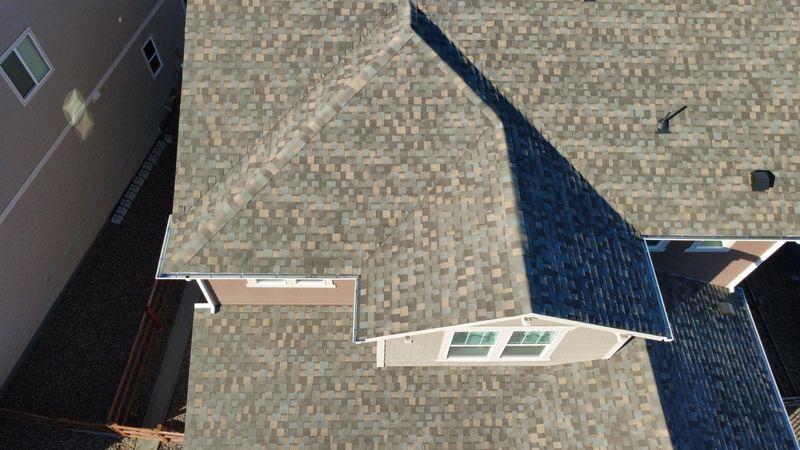
Shingles fail from the top down when hail and UV do their work, and they also fail from the bottom up when trapped heat and moisture attack the underside. Most homeowners only think about the top. A properly ventilated attic is one of the most effective and least expensive things you can do to extend the life of any roof.
How Attics Damage Shingles From Below
An under-ventilated attic accumulates heat and moisture. In summer, attic temperatures can climb well above outdoor air temperatures, especially on south-facing slopes. That heat bakes the underside of the decking and the shingles above. Over time:
- Asphalt shingles lose their plasticizing oils faster and become brittle.
- The adhesive strips between shingle courses can weaken, reducing wind resistance.
- Decking dries, shrinks, and can warp, causing shingle edges to lift.
- Manufacturer warranties are often voided when inadequate ventilation accelerates failure.
In winter, moisture is the bigger issue. Warm, moist air from the living space (from cooking, bathing, breathing) finds its way into the attic through unsealed penetrations and attic access hatches. When that moist air hits cold roof decking, it condenses.
Condensation and Ice Dams
Attic condensation causes a range of problems that are often misdiagnosed as roof leaks:
- Wet insulation that loses its R-value.
- Frost on the underside of the decking in cold snaps, which melts into "leaks" during warm spells.
- Mold growth on rafters and decking.
- Nail shiners (the shiny tips of fasteners) rusting and eventually pulling through the shingles.
The most visible cold-weather symptom is the ice dam. An unventilated attic is warmer than it should be, which melts snow on the upper roof. The meltwater runs down to the eaves, where the roof is colder (since it overhangs unheated space), and refreezes. The ice builds up, backs water up under the shingles, and produces interior leaks that typically show up on exterior walls in the rooms below.
The fix for chronic ice dams is rarely more heat tape or more ice and water shield. It is a combination of attic insulation, air sealing, and ventilation.
The Two Halves of a Ventilation System
Proper roof ventilation requires two things working together: intake at the eaves and exhaust at or near the ridge. Both halves are required.
Intake: Soffit Vents
Cool outside air enters the attic through perforated soffit vents on the underside of the roof overhang. The most common types are continuous strip vents, rectangular grilles, or perforated soffit panels. As long as they are free of paint, insulation, or debris blocking them from the inside, they provide steady, passive intake.
A critical and often-missed detail: soffit vents do no good if attic insulation is pushed up against the roof deck at the eaves. Insulation baffles (also called rafter vents) maintain a clear channel from the soffit into the attic space.
Exhaust: Ridge, Box, or Turbine Vents
Hot, humid air exits through exhaust vents near the top of the roof. The best modern choice for most homes is a ridge vent, a continuous vent running the entire length of the peak and concealed under a ridge cap shingle. Ridge vents provide a large, distributed exhaust area and are nearly invisible from the ground.
Older homes often have box vents (square plastic or metal vents cut into the roof), gable vents (in the end walls), or turbine vents (the spinning mushroom-shaped ones). These still work, though ridge vents are generally more effective.
Balanced Intake and Exhaust
The right ratio matters. Building code generally requires one square foot of net free ventilation area per 150 square feet of attic floor, cut in half to one-per-300 if a vapor retarder is installed and intake and exhaust are balanced. The ventilation area should be split roughly fifty-fifty between intake and exhaust.
Common mistakes we see:
- Too much exhaust, not enough intake. The ridge vent pulls from the closest available air source. If soffits are blocked, it pulls from other exhaust vents, other rooftop penetrations, or from inside the conditioned space.
- Mixing exhaust types. A ridge vent combined with gable or box vents can short-circuit the airflow, with the ridge vent pulling air from the other exhaust vents rather than from the soffits.
- Blocked soffits. Insulation that has settled or been blown in without baffles often covers soffit vents from the inside. The vents look open from outside but move no air.
A proper roof replacement is the ideal time to fix ventilation issues. The old roof is off, the deck is accessible, ridge caps and vents can be re-cut, and baffles can be added.
Signs Your Ventilation Is Insufficient
Homeowner-visible indicators that ventilation is a problem:
- Unusually high summer cooling bills, especially upstairs.
- Second-floor rooms that never get cool even with the AC running.
- Ice dams at the eaves every winter.
- Frost or dark staining on the underside of the roof decking when you look into the attic.
- Mold on rafters or sheathing.
- Shingles that look aged well beyond their years, or curling and lifting before their time.
- Wet spots on ceilings below the roof that come and go with the weather.
What a Ventilation Upgrade Looks Like
Most ventilation work happens as part of a roof replacement, but it can be retrofitted. Typical components:
- Cutting or enlarging the ridge vent opening.
- Installing continuous ridge vent material under a ridge cap shingle.
- Removing obsolete box or turbine vents and patching the decking.
- Adding soffit vents or replacing blocked panels.
- Installing rafter baffles at every eave bay to ensure clear intake.
- Sealing attic penetrations (around bath fans, recessed lights, top plates) to prevent conditioned air from entering the attic.
Get a Ventilation Check With Your Inspection
If we are inspecting your roof for damage or for a quote, we include a quick ventilation review at no extra charge. We look at intake, exhaust, and attic conditions, and we tell you whether the system is balanced and working. Correcting ventilation problems as part of a new roof is always cheaper than doing it after the fact.
Want Your Roof and Attic Inspected?
Free ventilation review is included with every roof inspection. We will tell you if the system is working and what it would take to fix if it is not.
Get a Free Estimate or call 855 ROOF-001