
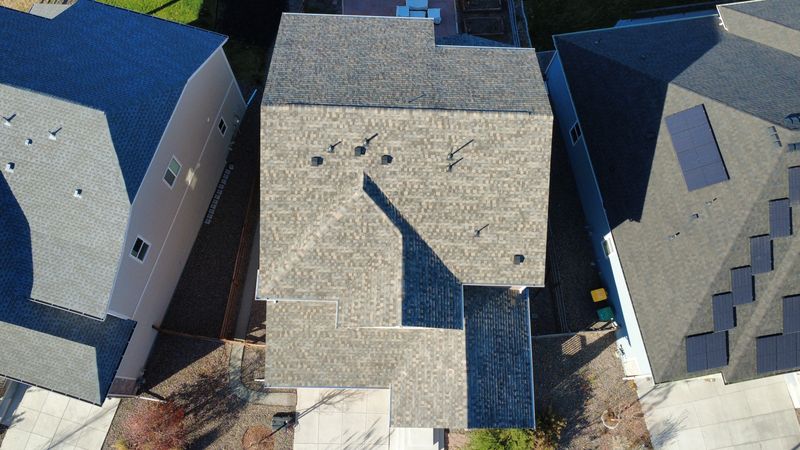
A patch job is usually the cheaper option today, but cheaper today is not always cheaper over the life of the roof. The right call depends on four things: how old the roof is, how widespread the damage is, whether insurance is paying, and how long you plan to stay in the home.
Start With the Age of the Roof
Most asphalt shingle roofs are warrantied for twenty-five to fifty years, but real-world life in the Colorado climate is often shorter. Hail, high UV exposure, and freeze-thaw cycles accelerate wear. A reasonable rule of thumb:
- Under 10 years old: Repair is almost always the right call unless the roof is a total loss from storm damage.
- 10 to 18 years old: Grey zone. Repair is fine if damage is isolated and the rest of the roof is in good shape. Full replacement becomes worth considering if you are already making repeated repairs.
- 18 or more years old: Lean toward replacement. Even if a repair would work, you are putting money into a roof that is near the end of its life.
If you do not know how old your roof is, the permit history from your county or a physical sticker on the back of a roof vent can usually tell you.
Look at the Extent of Damage
A single torn shingle or a small leak around a flashing is a repair. A large area of missing shingles, widespread granule loss, multiple leaks, or evidence of decking damage is a replacement.
Watch for these signs that the roof is near end of life:
- Curled, cracked, or missing shingles across several slopes, not just one.
- Heavy granule loss. Check your gutters. A cup of granules after a heavy rain is normal; a gutter half full is not.
- Exposed asphalt mat. When you can see dark, smooth patches where the granules used to be, the UV protection is gone and the mat is deteriorating.
- Bald spots or shiners. Shiners are nails that pop up when decking swells. Too many shiners suggest the deck itself is failing.
- Soft or spongy decking. If the roof feels like it gives under foot, moisture has penetrated and the substrate is compromised.
- Daylight visible from the attic. Obvious sign of a failed roof system.
- Sagging roof line. Usually structural, not just cosmetic. Needs immediate attention.
How Insurance Changes the Math
If a storm damages the roof and your policy covers it, replacement becomes financially far more attractive. In Colorado, Kansas, Missouri, Nebraska, and Wyoming, wind and hail damage are covered under most homeowners policies, typically with a separate hail or wind deductible (often one to two percent of dwelling coverage).
When insurance pays, you are responsible only for the deductible. That changes the question from "what is the cheapest fix" to "what is the right long-term solution given that most of the cost is covered." In those cases, it almost never makes sense to accept a repair-only scope if the damage is widespread.
A contractor familiar with residential roofing insurance claims can help you understand what your policy covers and document the full scope of damage before your adjuster finalizes the estimate.
When a Repair Makes Sense
Repairs are the right call when:
- The roof is under ten years old and the damage is localized.
- A specific problem (flashing, pipe boot, valley) is failing but the field shingles are intact.
- You are selling the home soon and simply need to address a specific inspection finding.
- The damage is clearly cosmetic and not compromising the water barrier.
A well-executed repair on a healthy roof can buy you many more years at a fraction of the cost of replacement.
When Replacement Makes Sense
Replacement is worth the investment when:
- The roof is approaching or past its expected service life.
- Damage is widespread across multiple slopes.
- You have already paid for two or more repairs in the past few years.
- There is decking damage or evidence of long-term moisture intrusion.
- An insurance claim covers most of the cost.
- You want to upgrade to Class 4 impact-resistant shingles for insurance discounts.
- You plan to stay in the home for more than five years.
A Word on Cost
Residential roof replacement costs vary widely based on pitch, complexity, material, and square footage. Asphalt is the most cost-effective option; designer and metal products are higher. We are happy to provide a written estimate that lays out the scope, materials, and pricing so you can compare it against the cost of ongoing repairs.
Get an Honest Assessment
Not every roofing contractor recommends the same thing. A reputable inspector will tell you when a repair is the right call, even if it means a smaller invoice today. If you are unsure whether your roof needs a repair or a full replacement, schedule a free inspection. We will tell you what we find and what we would do if it were our own home.
Need a Free Roof Inspection?
We inspect your roof, document its condition, and give you a straight answer on whether to repair or replace.
Get a Free Estimate or call 855 ROOF-001