
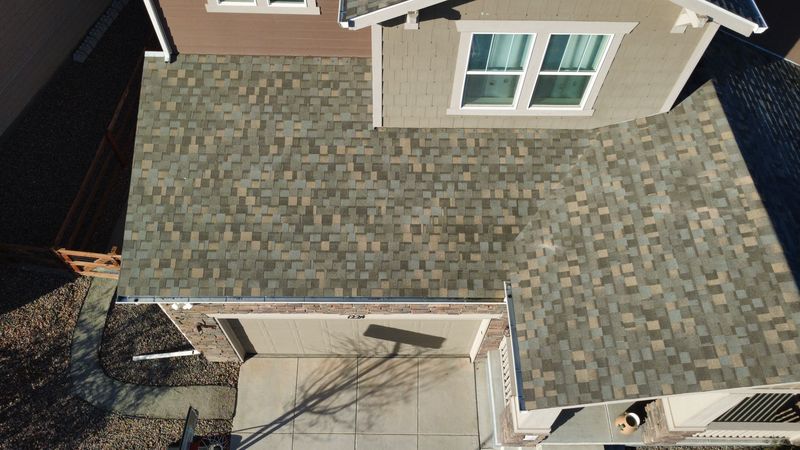
Homes along the Front Range and in eastern Kansas see some of the most active severe weather in the country. Hail, high wind, and the odd tornado are regular enough that most homeowners will file at least one storm claim during the time they own the property. Knowing what damage actually looks like and what your policy typically covers saves time and stress when the weather rolls in.
Types of Storm Damage
Hail Damage
Hail damage is the most common storm-related roof claim in our service area. Hailstones range from pea-size to larger than a softball. Damage generally requires one-inch or larger stones to cause shingle failure, though smaller hail driven by high wind can still cause problems.
What hail damage looks like on an asphalt roof:
- Bruising. The asphalt mat beneath the granule layer is fractured. To the touch, a bruise feels soft and spongy compared to the surrounding shingle.
- Granule loss. Circular patches where the protective granules have been knocked loose, exposing the darker asphalt underneath.
- Mat tears. Visible cracks or punctures through the shingle body.
- Broken or loose sealant strips. Shingles that no longer adhere to the course below.
Collateral indicators on other parts of the house: dented gutters and downspouts, dents in soft metal roof vents and flashing, dings in AC condenser fins, damage to patio furniture and vehicles, and shredded leaves in the yard.
Wind Damage
Straight-line winds, downbursts, and tornadic gusts can remove shingles outright, lift the edges of shingles so the adhesive strips fail, or drive rain under loose flashing. Look for:
- Missing shingles on one or more slopes.
- Lifted or creased shingles.
- Displaced ridge caps.
- Damaged or missing flashing at walls, chimneys, and skylights.
- Tree or branch impact damage.
Wind damage often concentrates on the windward-facing slopes of the roof. A roof with damage only on one or two slopes may still be a full-replacement claim depending on how the carrier handles matching.
Wind-Driven Rain and Water Damage
Secondary damage from water getting inside the building envelope is often covered even when the carrier would not cover a pre-existing roof condition. Examples include drywall damage, insulation saturation, and damaged flooring from a leak caused by a covered storm event.
What Your Policy Typically Covers
Most HO-3 homeowners policies (the standard policy form for owner-occupied homes) cover sudden and accidental damage from wind, hail, lightning, and other specified perils. "Sudden and accidental" is the operative phrase — wear and tear, maintenance problems, and gradual deterioration are generally excluded.
Typical covered line items on a storm claim include:
- Roof shingles and underlayment.
- Ridge vents and ridge caps.
- Flashing, valleys, and drip edge.
- Gutters and downspouts.
- Siding, windows, screens, and garage doors.
- Skylights, chimney caps, and fence panels.
- Interior damage caused by covered exterior failure.
- HVAC condenser fin damage (often on a separate claim).
Your declarations page will tell you your dwelling coverage limit, your wind and hail deductible (often a percentage of dwelling coverage, one to two percent is common in the hail belt), and any exclusions. Read it. If you have questions, call your agent.
What Adjusters Look For
When a field adjuster comes out, they are looking for damage that is consistent with a specific storm event and that affects enough area to justify a repair or replacement. Key things they will note:
- Density of hits per test square. Carriers often count impacts in a 10x10 foot test square. Thresholds vary by carrier.
- Evidence on soft metals. Dented vents, gutters, and flashing confirm hail was present and sized to cause damage.
- Pattern consistency. Damage concentrated on one or two slopes suggests a specific storm direction.
- Date of loss. Adjusters try to match observed damage to a specific storm event in the weather record.
- Pre-existing conditions. Wear, poor installation, and maintenance issues are documented and excluded.
Time Limits on Claims
Most Colorado, Kansas, Missouri, Nebraska, and Wyoming policies require claims to be reported promptly, generally within a year of the date of loss. Some carriers have shorter windows, and late reporting is the single most common reason otherwise valid claims get denied. The rule is simple: report sooner rather than later, even if you are not sure yet whether you will pursue the claim.
You can open a claim, get the adjuster to inspect, and then decline to proceed if the damage is below your deductible. You cannot easily resurrect a claim after the reporting window has closed.
Documenting Damage
Good documentation is the single biggest factor in whether a claim pays what it should. Best practices:
- Photograph everything, with timestamps. Phones record metadata automatically; leave it on.
- Include scale. Place a coin, ruler, or golf ball next to hail and damage for size reference.
- Shoot wide and close-up. Wide shots establish location on the house. Close-ups show the specific damage.
- Note the storm event. Write down the date, approximate time, and your source (NWS alert, local news, neighborhood conversation). This becomes your date of loss.
- Save a folder, back it up. Claims sometimes drag on for months. Do not lose the photos to a phone upgrade.
When to Call a Contractor
If you suspect storm damage, call a local roofing contractor for an inspection before you call your carrier. A pre-inspection tells you whether the damage is real and substantial, whether it meets typical claim thresholds, and whether it is worth opening a claim. A claim filed and then closed without payment can affect your insurability, so it is worth knowing before you file.
A reputable contractor should:
- Provide a free, no-obligation inspection.
- Document findings with photos and a written summary.
- Explain what they found in plain language.
- Be willing to meet the adjuster on site if you proceed with a claim.
- Never ask you to sign a work authorization or contingency agreement just for an inspection.
What Happens Next
If damage is confirmed, the path forward is straightforward: open the claim with your carrier, meet the adjuster and contractor on site, review the estimate, file supplements if needed, schedule the roof replacement work, and submit documentation for your recoverable depreciation. We have walked hundreds of Colorado, Kansas, Missouri, Nebraska, and Wyoming homeowners through this process.
If the damage is not substantial, a contractor who tells you so is doing you a favor. Not every hail event rises to a claim-worthy roof replacement, and saving your claim history for a future larger event is often the better strategy.
Recent Storm? Let Us Take a Look
We inspect for hail and wind damage at no cost, document everything, and give you a clear recommendation on whether to file a claim.
Get a Free Estimate or call 855 ROOF-001