- Call Us Today! 855 ROOF-001
- Email: info [at] RoofTechnologies.com

Roof Insurance Claims Support in Kansas City — KS & MO
End-to-end roof insurance claim documentation across the Kansas City bi-state metro — tornado, hail, wind, tree impact, fire, ice dam, and general storm perils. Kansas policies regulated by the Kansas Insurance Department; Missouri policies regulated by the Missouri Department of Commerce and Insurance. One crew, two states' worth of carrier relationships, and a documentation standard that carriers recognize on the first pass.
Google Rated
Joel Johnson was my rep and helped me navigate the process. They helped me overcome some hurdles with my insurance company. The communication was great and installation was efficient despite the challenges of living in the mountains. Overall was a good experience and glad I went with Joel and Roof Technologies.
— Andy M. — Google ReviewTornado, Hail, Wind, Tree, Fire — One Claim Workflow, Two Sets of State Rules
Kansas City claims are rarely single-peril. The same May supercell that drops baseball-size hail on Overland Park can spin up an EF-2 in Lee's Summit and knock a 60-year-old oak through a roof in Brookside two hours later. That means a claim here usually runs as a combined-peril event — and the carrier's first instinct is to classify it under whichever peril carries the highest deductible. Our job is to document every peril separately so the adjuster settles each one under the correct policy language.
Kansas and Missouri regulate roofing contractors, public adjusters, and insurance carriers differently. Kansas contractors register under K.S.A. 44-1801 and the Kansas Insurance Department oversees claim conduct statewide. Missouri has no statewide residential roofing license — registration is municipal (KCMO, Lee's Summit, Independence, Gladstone, each run their own) — and the Missouri Department of Commerce and Insurance regulates carriers under RSMo 375 and 20 CSR 100-1.010. Same metro, different books of law. We run both to the same documentation standard.
- Tornado, hail, wind, tree-impact, fire, smoke, ice dam, vandalism, general storm
- KS side: K.S.A. 44-1801 contractor filing, KID consumer complaint pathway
- MO side: municipal registration, MO DCI filings, code-upgrade supplement discipline
- NWS Pleasant Hill event confirmation pulls — radar, polygon, EF rating
- Adjuster walk-throughs with State Farm, Am Fam, Shelter, Farmers, Allstate, USAA
- Supplement packets built during tear-off, not after the roof is closed
Roof Perils Covered on a KC Bi-State Insurance Claim
Every peril carries different scope-of-loss mechanics, different deductible treatment, and different supplement opportunities. We document each one to the standard the adjuster expects to see.
Tornado & EF-Rated Wind
NWS Pleasant Hill track polygon, EF rating, debris-strike documentation, uplift patterns. Often triggers a separate wind/tornado deductible on both KS and MO policies.
Hail
Chalked test squares, slope-by-slope photos, soft-metal impact marks. Many KS and MO policies carry a 1–5% wind/hail percentage deductible. See our hail-specific KC page for more.
Straight-Line Wind
Ridge-cap loss, shingle creasing, fascia twist, vent damage. Derecho events in 2019 and 2023 stripped wind damage across both sides of the line — documented separately from hail.
Tree & Fallen Limb
Impact point documentation, structural deflection, decking penetration. Typically paid under the all-other-perils deductible, not wind/hail — which can matter by thousands of dollars.
Fire & Smoke
Structural and cosmetic damage from house fires, lightning strikes, and adjacent-structure fires. Coordinated with fire marshal report and mitigation contractor for total-loss or partial claims.
Ice Dam & Winter
Interior water staining, ice-and-water barrier failure, frozen gutter uplift. Most KC policies cover sudden accidental discharge, not long-term wear — documentation timing matters.
Vandalism
Deliberate shingle damage, graffiti on membrane roofs, theft of copper flashing or downspouts. Requires a police report and itemized scope; usually paid under the all-other-perils deductible.
General Storm
Mixed-peril events that don't cleanly sort into one category — wind-driven rain infiltration, lightning strike with no fire, power surge through roof-mounted equipment. Documented to the specific covered peril in your policy.
How Kansas and Missouri Regulate Roof Insurance Claims Differently
Same metro, two state regulators, two contractor licensing regimes, two complaint pathways. Here is what actually differs on a KC bi-state claim.
Kansas Side
- Contractor LicensingKansas requires roofing contractor registration under K.S.A. 44-1801 — a state-level filing with bond and insurance minimums. Unregistered contractors cannot legally perform re-roof work in KS.
- Carrier RegulatorKansas Insurance Department (KID), Topeka. Commissioner's office investigates under the Kansas Unfair Claims Settlement Practices Act (K.S.A. 40-2404).
- Public AdjustersLicensed by KID under K.S.A. 40-5501 et seq. Fee cap typically 10% on catastrophe claims, written contract required.
- Class 4 Discount FilingKansas uses a centralized rate-filing process; UL 2218 shingle endorsement usually applies quickly once the certificate is filed with the carrier.
- Complaint PathwayKID Consumer Assistance Division — insurance.kansas.gov or 800-432-2484. File open on the carrier triggers scrutiny on subsequent claims.
- Carrier StrengthAmerican Family writes a large KS book (especially Johnson County). State Farm KS is separately licensed from State Farm MO.
Missouri Side
- Contractor LicensingMissouri has no statewide residential roofing license. Municipal registration varies — KCMO, Lee's Summit, Independence, Gladstone, Blue Springs, and Liberty each run their own process with separate bond and insurance requirements.
- Carrier RegulatorMissouri Department of Commerce and Insurance (DCI), Jefferson City. Enforces RSMo 375 and the Missouri Unfair Claims Settlement Practices Act (20 CSR 100-1.010 et seq.).
- Public AdjustersLicensed by DCI under RSMo 325. Similar fee cap; 3-business-day cancellation right on the written contract.
- Code-Upgrade SupplementsMissouri adopts IRC/IECC at the municipal level, so code-upgrade coverage (R-49 attic insulation, ice-and-water barrier per R905.1.2, decking standards) varies by jurisdiction — we cite the specific city code edition on every MO supplement.
- Complaint PathwayDCI Consumer Affairs Division — insurance.mo.gov or 800-726-7390. Complaints can compel carrier response within statutory windows.
- Carrier StrengthShelter Insurance is dominant in Cass, Clay, Platte, and Jackson. State Farm MO is a separate licensed entity from State Farm KS.
How Major KC Metro Carriers Handle a Claim on Each Side of the Line
Adjuster preferences, scope-line expectations, and supplement openness differ by carrier and by state. Here's what we've learned running hundreds of claims with each.
| Carrier | KS Side | MO Side | Claim Handling Notes |
|---|---|---|---|
| State Farm | Strong | Strong | Separately licensed KS vs MO entities — different underwriting, different form language. Largest book on both sides combined. |
| American Family | Dominant in JoCo | Available | KS side: fast adjuster dispatch, routine Class 4 endorsement. MO side: slower, more scope negotiation. |
| Shelter Insurance | Available | Dominant MO carrier | Cass, Clay, Platte, Jackson stronghold. Shelter MO adjusters know KC housing stock and historic tile well. |
| Farmers | Available | Available | Consistent behavior across state line; supplement discipline varies by adjuster. |
| Allstate | Available | Available | Often uses independent adjusters — scope quality varies; supplement support is usually needed. |
| Liberty Mutual / Safeco | Available | Available | Consistent Class 4 endorsement filing on both sides; scope tends to come in light on decking. |
| USAA | Available | Available | Military-affiliated KC homeowners. Strong claim payment culture; adjusters respond quickly on both sides. |
| Travelers | Available | Available | Detailed scoping software output; supplement needs specific carrier line-item formatting. |
How a KC Bi-State Roof Insurance Claim Runs, Start to Finish
Same process on both sides of the line, with KS-side or MO-side filings swapped in at each step. The steps don't change; the regulator and carrier entity do.
Inspection & Peril Documentation
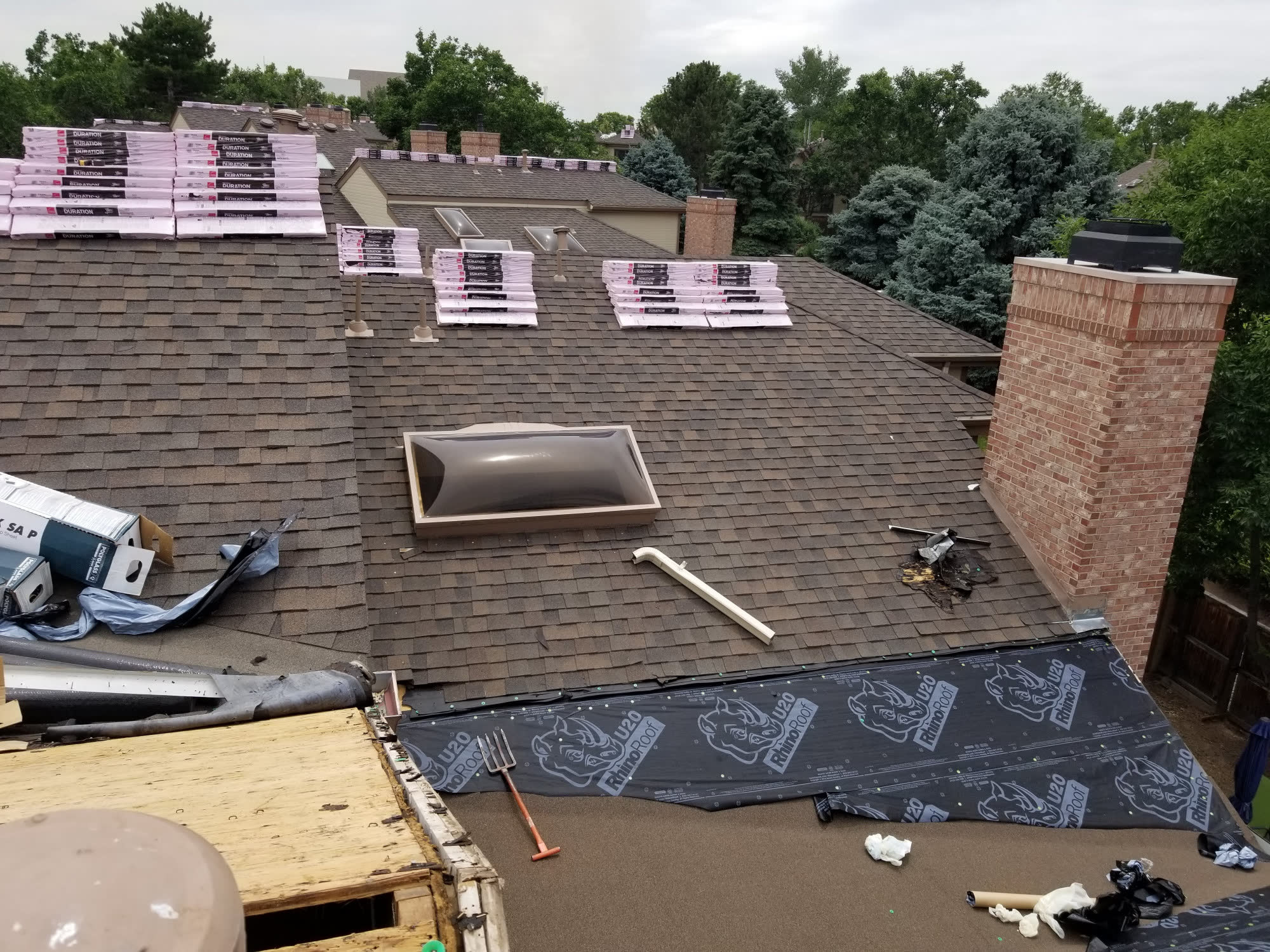
Chalked test squares, slope-by-slope photos, attic-side intrusion check, NWS event pull for the storm date. Each peril documented separately.
Carrier Notification
First Notice of Loss filed with your carrier — KS entity or MO entity depending on property address. We provide the event docs for attachment.
Adjuster Meeting
We meet the carrier's adjuster on-site, walk the roof and property, and make sure every documented peril is on the scope of loss before it closes.
Supplement Packet
Built during tear-off — code-upgrade items (R-value, ice-and-water, decking), hidden damage, MO jurisdiction-specific code citations. Filed before roof closes.
Depreciation Release
Final invoice submitted, recoverable depreciation released from ACV to full RCV. Mortgage-company handling coordinated on larger losses.
Bi-State Claim Experience Is a Documentation Discipline, Not a Marketing Line
Running a claim on the Kansas side under State Farm KS is a different exercise than running the same claim on the Missouri side under State Farm MO. Different entity, different policy form, sometimes different recoverable-depreciation handling, and on catastrophe events, different adjuster teams. Knowing which one you're filing against — and which scope line items that specific adjuster expects to see — is how claims close in 30 days instead of 90.
On tornado + hail combined events, the single biggest dollar item is usually the deductible math. Many KC policies carry a flat all-other-perils deductible (often $1,000–$2,500) alongside a wind/hail percentage deductible (1–5% of Coverage A, often $3,000–$10,000 on KC housing). If the carrier classifies a tree-impact loss as wind rather than all-other-perils, you can lose thousands. We read your declarations page before we file anything.
And on MO code-upgrade supplements — R-value, ice-and-water barrier, decking standards — the difference between a paid and denied supplement is usually whether the scope cites the specific KCMO, Lee's Summit, or Gladstone code edition adopted for that address. Generic "code upgrade" language gets denied. Jurisdiction-specific R905.1.2 citation gets paid.
Start a Claim Inspection
What KC Insurance-Claim Customers Say
Manufacturer Certifications & Industry Accreditations
Related Kansas City & Claim Resources
Free KC Metro Roof Claim Inspection & Written Scope of Loss
Serving both sides of the Kansas City metro — Johnson, Wyandotte, Leavenworth (KS) and Jackson, Clay, Cass, Platte (MO). Drop your address, side of the state line, and peril type — a KC-based estimator will reach out the same business day. Free, written, and carrier-ready.