
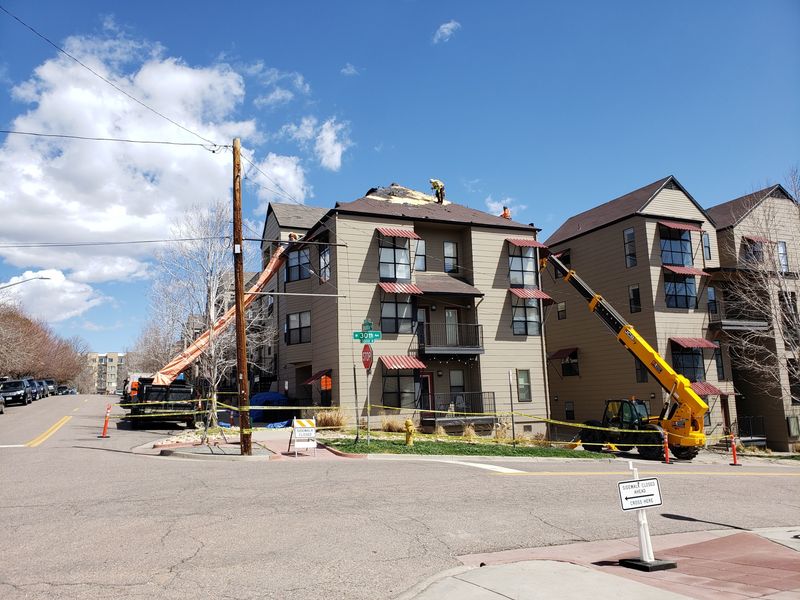
A Colorado HOA roof approval is usually not as hard as homeowners fear. What makes it feel hard is not the approval criteria themselves, which are typically reasonable, but the lag between submitting paperwork and hearing back. An ARC that only meets monthly, paired with an insurance claim that needs to be scheduled in the current season, is where homeowners get frustrated. A little upfront planning makes the process almost painless.
Here is how to move from claim approval to ARC approval without losing your hail-season work window.
What an HOA ARC Actually Looks For
The Architectural Review Committee (ARC) is not there to block your roof. They are there to enforce the color and material palette approved for the neighborhood. On a roof, that typically means three things:
- Shingle color. Must be on the approved list, which is usually 4 to 12 colors.
- Shingle manufacturer and product. Sometimes specific brands or architectural grades are required.
- Accents and visible details. Skylight frames, solar panels, vent styles, and occasionally gutter color.
Most ARCs do not care about the underlayment, the deck condition, the code upgrades, or the labor specification — those are between you, your contractor, and the city inspector. ARC approval is specifically about curb appeal and neighborhood cohesion.
Get the Governing Documents Before You Pick a Color
Every HOA has a set of governing documents: Declarations, Rules, and Architectural Guidelines. Your HOA manager or the ARC chair can send you the relevant sections. Specifically request:
- The approved shingle color list (by manufacturer and exact product name, not generic descriptions).
- The ARC application form.
- The ARC meeting schedule and submission deadlines.
- Any specific requirements for impact-resistant (Class 4) shingles.
- Any requirements about contractor licensing or insurance.
Do this before picking a color or signing a contract. Picking a color that is not on the approved list and then asking for an exception is much harder than starting from the list.
The Class 4 Shingle Question
Many Colorado HOAs have specifically added Class 4 impact-resistant shingles to their approved-materials list over the past decade. Some require Class 4 as a minimum standard. The insurance discount (covered here) is substantial, and HOA boards have recognized that encouraging Class 4 reduces neighborhood insurance claim exposure over time.
If your HOA's approved list does not include a Class 4 option in your preferred color, request an addition. Most ARCs will update the list to include a Class 4 version of an already-approved color if asked. The approval just requires an ARC vote and an updated guidelines document.
The Standard ARC Application Packet
A complete ARC application for a roof replacement typically includes:
- The completed ARC application form.
- A copy of the contractor's Colorado license and insurance certificates.
- The manufacturer's spec sheet for the exact shingle (product name, color name, UL 2218 classification if Class 4).
- A physical sample shingle or manufacturer-produced color sample.
- Photos of the existing roof showing current condition.
- The estimated start and completion dates.
- A sketch or plan showing any significant changes (uncommon for a straight re-roof but required if changing from shingles to metal, adding skylights, etc.).
- Any required fees (typically $50 to $200).
Submit the packet to the HOA management company or the ARC chair. Keep a dated copy for your records.
Timeline Expectations
This is where HOAs vary most. The typical timelines we see:
- Monthly-meeting ARCs: 2 to 6 weeks from submission to approval, depending on when in the monthly cycle you submit.
- As-needed ARCs: 1 to 3 weeks for most re-roof requests.
- Expedited-storm-claim approval: Some ARCs have a fast-track process for insurance claims that approves in 3 to 7 days with reduced documentation.
Ask about the expedited storm-claim process specifically. Many HOAs established these after the 2017, 2018, and 2023 hail seasons when the backlog of claims overwhelmed normal monthly review cycles.
Common ARC Rejection Reasons (and Fixes)
Color Not on the Approved List
Most common. Fix: resubmit with a color from the approved list. Do not install an unapproved color and ask for forgiveness later; you may be required to replace it at your cost.
Manufacturer Not on the Approved List
Less common but happens, especially with boutique manufacturers. Fix: find an equivalent product from an approved manufacturer. All major manufacturers (IKO, CertainTeed, GAF, Malarkey, Owens Corning) have comparable products in similar colors.
Missing Contractor Documentation
ARCs routinely require proof of contractor license and insurance. Resubmit with the required documentation.
Incomplete Application
Missing form fields, missing samples, missing photos. Resubmit with the complete packet.
Scheduled Work Date Too Soon
Some ARCs require work to be scheduled at least 30 days after approval. If you submitted with a start date in 2 weeks, you may need to push the schedule back.
The Post-Approval Follow-Up
Some HOAs require post-completion verification, which typically involves:
- A photo submission after the work is complete.
- Confirmation that the installed product matches the approved product.
- A close-out letter from the HOA confirming approval is complete.
Keep a copy of the approved application and the post-completion letter with your home records. If you sell the home, the buyer's title insurance and HOA estoppel request may ask about roof approval status.
When You Cannot Wait for ARC Approval
Occasionally a roof is leaking actively and cannot wait for a multi-week ARC review. Options:
- Request emergency approval from the ARC chair. Most HOAs have provisions for active water damage.
- Install a temporary tarp or emergency repair. Most HOAs do not require ARC approval for temporary weather protection.
- Schedule the tear-off only pending ARC final approval, using a documented emergency request. This is unusual but legitimate for leaking roofs.
Never install a new roof without ARC approval on the assumption that it will be approved later. If the ARC rejects the color or material, you are on the hook to replace it.
If the ARC Is Obstructive or Unfair
Rarely, an ARC denies a reasonable request for non-legitimate reasons (personal disputes, arbitrary interpretation of guidelines, failure to follow the HOA's own procedures). Colorado has statutory requirements around HOA governance under the Colorado Common Interest Ownership Act (CCIOA), and the HOA must follow its own documented process.
Escalation options:
- Request a written explanation of the denial.
- Request a hearing before the full HOA board.
- File a complaint with the Colorado HOA Information and Resource Center (DORA).
- Consult an attorney specializing in HOA law (rare, usually reserved for significant disputes).
In 15+ years of working Front Range HOAs, we have seen exactly these escalations used for legitimate disputes and they have resolved reasonably. The vast majority of ARC reviews complete without conflict.
Related Reading
Need Help With Your HOA Application?
We pull the approved shingle list from your HOA, match it to the insurance-covered scope, and submit the ARC packet for you. Included in every Colorado re-roof we install.
Get a Free Estimate or call 855 ROOF-001