
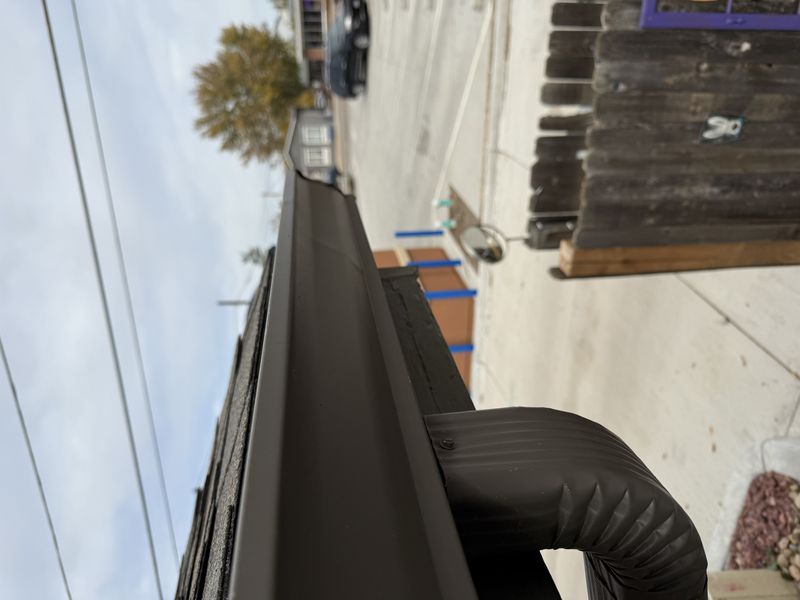
The roof is the single largest continuous color surface on the exterior of most homes. A Front Range two-story with a 30-square roof shows more roof surface to the street than siding, stucco, and trim combined. Get the color pairing right and the home looks like it was designed by an architect. Get it wrong and it looks like the roofer picked a shingle off a chart without looking at the house.
Here is how to think through roof color when you already have siding, stucco, and trim in place that you are not changing.
The First Rule: Don't Match, Coordinate
The most common mistake homeowners make is trying to match the roof color to an existing exterior element. "The siding is gray, so let's get gray shingles." That usually produces a tone-on-tone look that reads as flat from the curb.
Good roof pairings are coordinated, not matched. The roof should sit in the same color family as one of the major exterior elements, typically one or two shades darker, with enough contrast against the trim that the house shape reads clearly.
Three Reliable Pairing Frameworks
The Neutral Triangle
Pick three neutrals that work together: a dark roof, a medium-toned siding or stucco, and a light trim. This is the pairing approach on most Front Range homes and it almost never fails.
Examples we install frequently:
- Weathered wood or estate gray shingle / beige-tan stucco / white trim.
- Black or onyx shingle / light gray LP SmartSide / white trim.
- Driftwood or hickory shingle / cream stucco / dark brown trim.
The Complement Pull
Pick a roof color that picks up a secondary color already on the house. If the stone veneer on the entry has warm brown tones, a driftwood or hickory shingle amplifies those tones and ties the entry stone into the whole house. If the front door is deep forest green, a charcoal shingle with subtle green undertones reads as intentional.
This is the approach on homes with visible stone or brick accents. The roof should pull tone from the accent material, not from the main body color.
The Bold Anchor
Occasionally the right move is a dark, saturated roof that anchors a lighter house. A charcoal or black roof over a cream stucco reads as Craftsman or Tudor-adjacent depending on trim. This pairing requires good trim color and strong landscaping to balance; otherwise the house looks top-heavy.
Front Range-Specific Pairings That Work
Based on what we see working on thousands of homes across the Denver, Boulder, and Northern Colorado markets:
Mountain-Modern Homes
Dark gray or black roof with warm wood soffit and stone accents. Weathered wood shingle is the safe choice; onyx black reads as more contemporary.
Traditional Suburban Two-Story (Beige or Tan Stucco)
Weathered wood, driftwood, or mission brown shingle. These brown-leaning shingles sit in the same family as the stucco and avoid the flat gray-on-gray mistake.
Mountain Chalet Style (Dark Wood Siding)
A dark charcoal or black roof reinforces the chalet profile. Avoid brown shingles; they fight with the wood siding.
White or Cream Farmhouse
Black, charcoal, or dark slate. A dark roof on a white house is classic for a reason.
Red Brick Home
Weathered wood or hickory. Avoid gray; it fights with the red undertones. Black can work but tends to look heavy against brick.
Gray-Toned Contemporary
Black or onyx. Stone gray or aged pewter shingles also work. Avoid brown-leaning shingles.
The Three-Sample Test
Before picking a shingle, get three full-size sample shingles from the contractor in your top three color options. Not swatches, not brochure photos, not manufacturer websites. Full-size shingles placed physically on the roof or against the house.
Steps:
- Tape or lean each sample against the siding in an area with strong daylight.
- Look at the pairing from across the street in direct sunlight.
- Look again in overcast conditions on a different day.
- Look at it in early morning and late afternoon when the sun is low.
A color that looked great on a chart can read very differently on a real surface at different times of day. Shingles are three-dimensional with multiple granule colors, and the effective color shifts with sun angle.
Colors That Date a Home Faster
Some shingle colors read as current today but will date the house within a decade. We see this clearly on homes built in the 1990s and 2000s. Specifically:
- Heavy green and blue shingles from the late 1990s look dated today. Even on homes where the color was correct at the time, a re-roof in those colors now will look dated again quickly.
- Very orange-red "terra cotta" asphalt shingles from the early 2000s are another example. The replacement trend is toward neutral browns.
- Light tan or almond shingles against tan siding (the dreaded "tan on tan") were popular in the early 2000s and consistently under-perform on resale.
The colors that have held up across decades are the neutrals: black, charcoal, weathered wood, driftwood, hickory, and slate gray. A neutral roof will still look current in 20 years. A trend color will not.
Coordinating With HOA Requirements
If your home is in an HOA, the ARC (Architectural Review Committee) probably maintains a list of approved shingle colors. Most HOAs accept any of the common neutrals within a defined brand. A few have very specific rules (some restrict to one or two colors, some require matching a neighborhood-wide palette).
Check with your HOA before picking colors. We cover HOA approval in our dedicated HOA roof approval post.
The Matching Argument on Partial Replacements
If you are reading this because you have an insurance partial-replacement scope and you are trying to decide whether to match the remaining slopes, that is usually the wrong question. The right question is whether the partial replacement can reasonably match the old shingles at all. On a roof over 10 years old, or where the original product is discontinued, the answer is often no. In that case Colorado's matching statute may convert the partial to a full replacement, which avoids the matching problem entirely.
Raise this with your adjuster before proceeding. Uniform color is usually worth more than the cost difference between a partial and a full.
Related Reading
Need Help Picking a Color That Works?
We bring full-size shingle samples to every estimate and walk through the pairing on your house before you commit. Free, no obligation.
Schedule a Color Consultation or call 855 ROOF-001