
Half of the problems that show up on a roof inspection are visible from the ground. You do not need a ladder, you do not need a drone, you do not need experience reading shingles. You need ten minutes, a camera phone, and a willingness to walk the perimeter of your house before the first big hail hits. Catching issues now means they get fixed before a storm turns a minor problem into a claim.
Here is the checklist we give homeowners when they ask what they can do themselves.
1. Shingle Debris in the Gutters or on the Lawn
After a windy day, walk the drip line around the house and check for shingle granules, tab pieces, or full shingles. Small piles of black or gray granules that look like coarse sand are a sign that the shingle surface is shedding. A lot of shedding on a roof under 10 years old suggests manufacturing defects or installation damage. Shedding on a 20-year-old roof is just age.
2. Shingle Edges Lifting on Ridges and Rakes
Stand across the street from your house and look at the ridge line and the sloped rake edges. Individual shingles that are curled up at the corners or flapping in a light breeze are the earliest sign of seal-strip failure. If you can see more than a handful from the ground, the roof has lost its wind resistance and the next 60 mph gust will peel them off.
3. Dark Streaks Running Down the Roof
Dark algae streaks are cosmetic, not structural, but they point to poor ventilation and long-term moisture retention. If you see streaks, check attic ventilation. A roof that stays wet shortens shingle life by years.
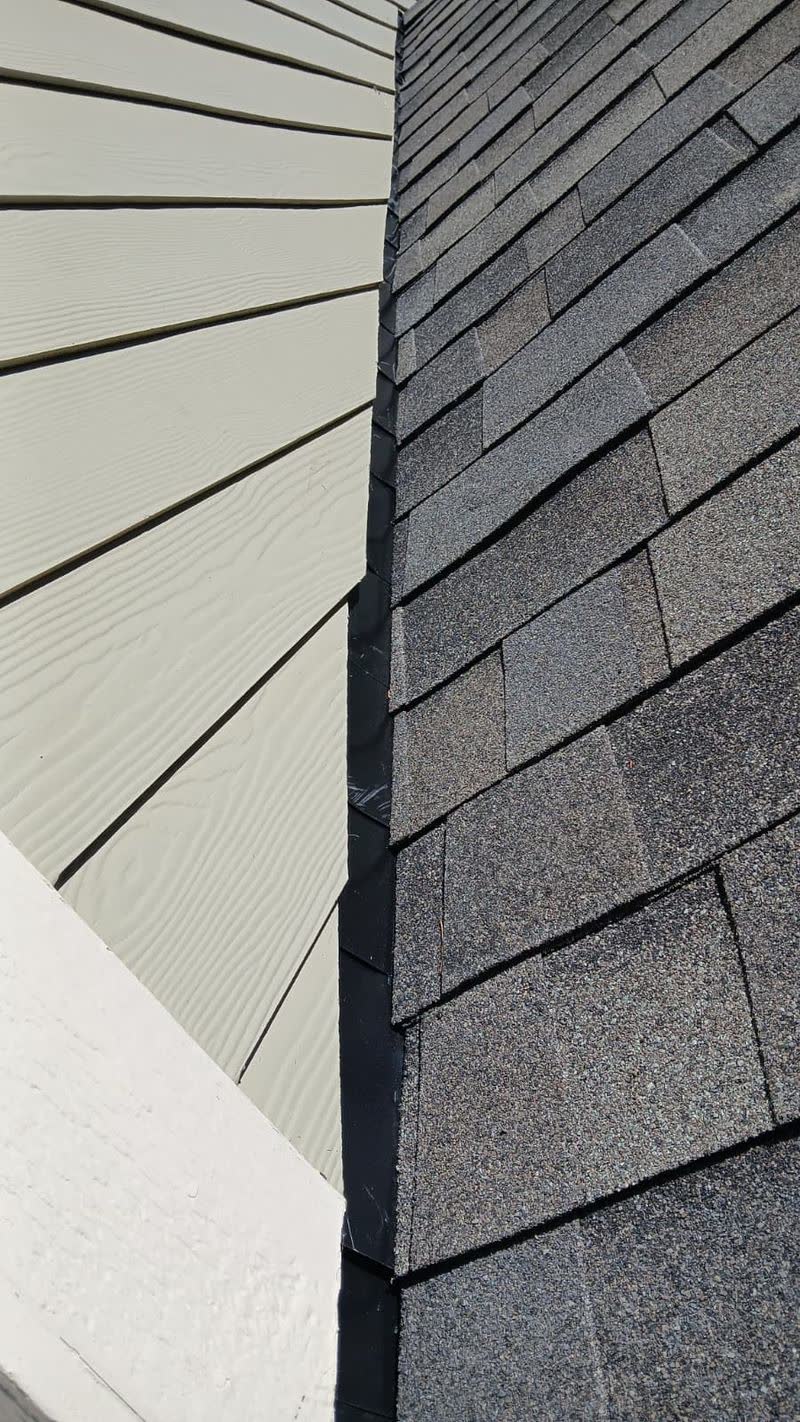
4. Daylight at the Chimney, Skylights, or Vents
Walk around the exterior of the house and look at the seams where the roof meets vertical surfaces. Visible daylight from the ground on a sunny day means the flashing is separated or missing. Water will find that gap during the next storm.
5. Gutters Pulling Away from the Fascia
Stand where you can sight along the length of the gutter. Any sections that sag, lean outward, or have pulled away from the fascia board are failing. During a hail event, the impact load on a loose gutter often tears it free entirely. Tighten or re-hang before the storm, not after.
6. Downspouts That Dump Against the Foundation
Check where each downspout ends. If a splash block has been knocked aside or an extension has been removed, water is pouring against the foundation every time it rains. This is not a roof issue, but it is a water-intrusion issue that gets much worse during a stormy spring.
7. Soffit or Fascia Damage
Look up under the eaves. Discolored, soft, or missing pieces of soffit or fascia wood mean water has been running behind the gutter. Squirrels and raccoons also chew their way in through soft soffits. Either one is a reason to call a roofer now, because both get worse under a hailstorm's runoff.
8. Sealant Cracks Around Flashings and Penetrations
You can usually see the sealant bead around pipe boots and flashings from the ground with binoculars. Cracked, peeling, or missing sealant is the most common source of a small leak becoming a big one. A $12 tube of roofing sealant and a 20-minute fix by a roofer buys years of reliability.
9. Debris Accumulation in Valleys and Behind Chimneys
Sticks, pine needles, and cottonwood fluff trap water in roof valleys and behind chimneys. During a heavy rain, a dammed valley sends water sideways under the shingles. If you can see debris from the ground, it is past time to have it cleared.
10. Interior Ceiling Stains You Forgot About
Walk through every room and look at the ceilings in a good light. Faint yellow or brown rings, bubbled paint, or soft drywall above a window or under a bathroom vent are leak tells. Any active leak will be dramatically worse after a major storm. Fix it now.
When Self-Inspection Is Not Enough
Ground-level inspection catches a lot but not everything. Bruised shingles, popped nails, valley failures, and manufacturer defects often cannot be seen from below. If your roof is over 10 years old, or if your neighbors have had recent hail claims, the 15-minute professional roof inspection we offer for free is worth scheduling before your first storm of the year. We photograph every slope, document the condition, and give you a written report you can keep on file for insurance purposes.
The Documentation Win
Even if everything is fine today, photographing your roof, gutters, siding, and AC condenser before hail season gives you a dated baseline. If a storm hits in July and an adjuster claims your damage is "pre-existing wear," a set of April photos ends that argument in about 15 seconds. Take the photos. Store them in a labeled folder on your phone. You may never need them, but the year you do need them, you will be glad.
Related Reading
Want a Professional Pre-Season Roof Check?
Our inspectors give you a photographed, written report of your roof's condition with no obligation. Free. Scheduled around your calendar.
Schedule a Free Inspection or call 855 ROOF-001