
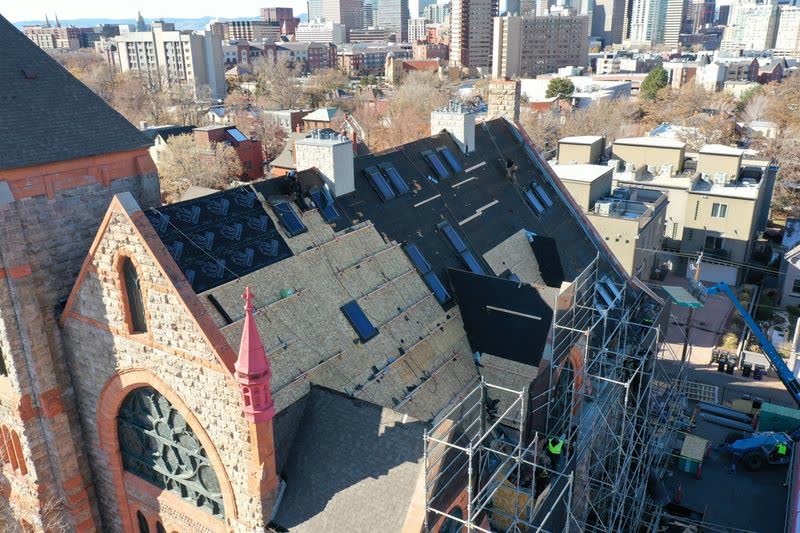
On a residential hail claim, the supplement typically adds 15 to 30 percent to the initial estimate. On a commercial claim, the same process routinely finds $50,000 to $500,000 that the initial scope missed, and occasionally surfaces six-figure-plus recoveries on single buildings. The reason commercial supplements run so much larger is not that commercial adjusters are less thorough; it is that commercial buildings have more systems, more code complexity, more interior exposure, and more business-interruption impact than a residential roof. The initial 90-minute walk simply cannot capture it all.
Here is where the missed money typically hides.
Code Upgrades on Commercial Roofs
The code upgrade allowance on a commercial policy is usually larger than the residential equivalent (typically $25,000 to $100,000+ depending on building size and occupancy), and the code upgrade requirements at re-roof time are more extensive. Common code-driven line items:
- Insulation R-value upgrade. Current IBC/IECC code in Colorado, Kansas, Missouri, Nebraska, and Wyoming requires R-30 minimum for most commercial roofs. Many aged buildings are at R-15 or R-19. A re-roof triggers the code, and replacing the insulation stack is a major line item.
- Tapered insulation to eliminate ponding. Code requires positive drainage. An aged roof with ponding areas may require a tapered insulation package at re-roof time to bring it into compliance.
- Cover board. Many manufacturer warranties and current codes require a cover board under thermoplastic membranes. If the existing system did not have one, adding it is a scope addition.
- Fire-rated assembly requirements. Some occupancies (warehouse, manufacturing, multi-family) trigger specific fire-rating requirements that affect the membrane, insulation, and deck selection.
- Wind-uplift fastening pattern. Updated fastening specs under current code often require more fasteners per square than the original installation.
- Perimeter and corner enhancement. High-wind zones (much of Colorado, Kansas, Missouri, Nebraska, and Wyoming) require enhanced fastening or mechanically-attached perimeter and corner details.
- Parapet and wall flashings to current detail. Older systems used details that no longer meet wind or water requirements.
On a 50,000 square foot building, a full code-upgrade supplement routinely lands in the $80,000 to $250,000 range when all of these items are in play.
Interior Scope That Was Not Visible on Day One
The commercial adjuster's initial walk is on the roof. They usually do not check every office, every tenant space, every warehouse aisle, and every insulation cavity. Interior scope that commonly gets missed and surfaces later as a supplement:
- Ceiling tile damage from water infiltration.
- Drywall soffit repairs above damaged ceiling grids.
- Insulation replacement where water has compromised R-value.
- Inventory or equipment damage in staging areas.
- Carpet tile and LVT replacement where water reached the floor.
- Wall-covering damage in office spaces.
- Paint and finish work in affected areas.
- Mold remediation if water sat long enough for growth.
On a multi-tenant office building or warehouse, the interior supplement is often as large as the roof supplement itself.
Disposal and Site Work
Commercial tear-offs produce large volumes of waste (insulation, membrane, flashings, sometimes hazardous materials). Disposal line items are frequently understated in initial estimates:
- Dumpster quantity and weight-based pricing.
- Hazardous-waste surcharges where the membrane is a regulated material.
- Asbestos testing and abatement on roofs predating the mid-1980s.
- Traffic control and site protection fees on urban buildings.
- Crane or hoist rental for loading materials onto the roof.
- After-hours or weekend work premiums if tenant operations require it.
Access and Staging
Depending on the building, material access can be a major line item. A downtown office building with a secure loading dock and elevator schedule has dramatically different access costs than a suburban warehouse with drive-up access. Initial estimates often use a standard access assumption that does not match site reality.
Business Interruption and Overhead
Many commercial property policies include business interruption coverage for loss of use during the repair period. This is a separate claim within the overall policy and requires its own documentation, but the timing and scope of the roof work triggers it. Missing the business interruption line is the single largest category of under-claimed coverage we see on commercial properties.
Overhead and profit (10 and 10) also applies to commercial claims and is often larger in absolute dollars than the residential equivalent because the base is so much bigger.
Scope Gaps Unique to Commercial Work
Solar Arrays
Commercial buildings with rooftop solar require removal, storage, and reinstall coordinated with the solar contractor. This is routinely under-priced or missed entirely in initial estimates. Typical cost: $3 to $6 per watt for R&R on a large commercial array.
HVAC Equipment
Rooftop HVAC units need lifting and resetting during a roof replacement. A large unit may need crane service and mechanical contractor coordination. Fifteen rooftop units at $1,500 each for coordination is a $22,500 line that initial estimates sometimes skip.
Gas Lines and Electrical Conduit
Rooftop gas lines and electrical runs often require licensed-trade coordination for temporary disconnects during tear-off and reinstall. These are real costs and need to be in the scope.
Safety and OSHA Compliance
Commercial roofs over a certain height require fall protection systems during the work. Warning lines, guardrails, and personal fall arrest systems carry real costs and are part of the code-compliant scope.
How to Pursue a Commercial Supplement
The process is similar to residential but takes longer and involves more documentation:
- Review the initial estimate line-by-line against the actual scope required.
- Document every missing item with photos and specifications.
- Write the supplement in Xactimate using the carrier's price list.
- Submit through the assigned adjuster and the commercial claims desk.
- Schedule a re-inspection on site with the adjuster and the roofing consultant.
- Negotiate disputed items through documented back-and-forth.
Typical timeline for a commercial supplement from submission to approval: 4 to 12 weeks. Large claims involving six-figure supplements may run 3 to 6 months through approval. Patience and documentation discipline are the key traits.
Public Adjusters and Commercial Counsel
On large commercial claims (seven-figure total exposure), a public adjuster or attorney experienced in first-party property claims frequently adds more value than they cost. Contingency rates typically run 10 to 20 percent of the recovered supplement, and on a $400,000 supplement that fee is usually justified by the additional recovery they generate. On small or mid-size claims, the contractor's supplement work is usually sufficient.
The Owner's Role
Commercial building owners and property managers should expect to be actively involved in the supplement process. Key owner contributions:
- Provide access to interior spaces for damage inspection.
- Share pre-event documentation and maintenance history.
- Identify tenant-facing impacts that affect business interruption.
- Coordinate with trades (mechanical, electrical, solar) for their scope.
- Sign off on the supplement submission package before filing.
A hands-off owner who defers every decision slows the process and leaves recoveries on the table. The best outcomes come from an engaged owner paired with an experienced commercial roofing consultant and, where warranted, a public adjuster or attorney.
Related Reading
Commercial Claim Under-Scoped?
We review commercial roof claim estimates for property managers and building owners across Colorado, Kansas, Missouri, Nebraska, and Wyoming. Free initial review, no obligation.
Request a Commercial Claim Review or call 855 ROOF-001