
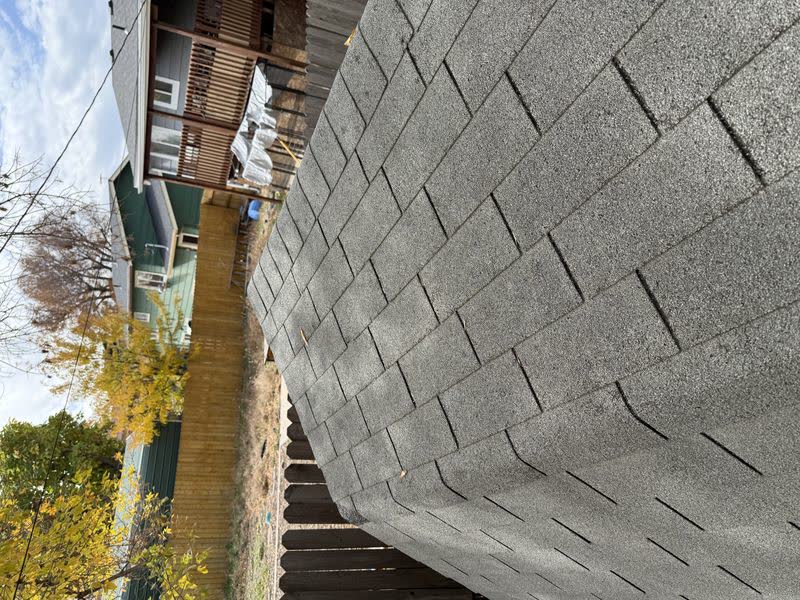
Most gutter guard reviews assume the homeowner lives in a neighborhood full of oak and maple trees that drop big, easy-to-filter leaves. Colorado foothills homes do not. The debris mix on a Front Range roof in October is a combination of ponderosa pine needles, Douglas fir needles, aspen catkins, cottonwood fluff, and the occasional squirrel snack. That mix defeats most of the gutter guards sold at big-box stores. Here is what actually works.
Why the Debris Matters More Than the Guard Brand
Pine needles are long, thin, and slide through most screens. Cottonwood fluff clumps into wet mats that suffocate every surface they land on. Aspen catkins are sticky in May and June and cement themselves to any horizontal surface. Oak and maple leaves, which most guard reviews assume, are simply not the dominant debris in most Front Range and foothills neighborhoods.
The right gutter guard for your property depends almost entirely on the dominant debris at your address. A guard that works beautifully in Kansas City may fail inside a month in Evergreen.
The Five Categories of Gutter Guards
1. Screen Guards (Plastic or Metal Mesh, Large Openings)
The cheapest category, typically $1 to $3 per linear foot installed. Larger openings (1/8 to 1/4 inch) allow most debris to pass through and pile up in the gutter itself, defeating the purpose. Pine needles slide through easily. Screen guards reduce but do not eliminate gutter maintenance.
Works for: Small-leaf debris, occasional leaf drop, areas with minimal pine or cottonwood.
Fails against: Pine needles, cottonwood fluff, aspen catkins.
2. Foam Inserts
Porous foam strips that sit in the gutter. Water runs through the foam, debris sits on top. Works for a year or two, then the foam clogs with fine debris and needs replacement.
Works for: Temporary solution, short-term rental property, specific problem gutters while budgeting a permanent fix.
Fails against: Long-term use. Every foam insert eventually clogs.
3. Reverse-Curve (Surface Tension) Guards
A curved metal surface that uses water's surface tension to pull water around the curve and into the gutter while leaves fall off the edge. Brand examples include Gutter Helmet and LeafGuard.
Works for: Dry leaves, moderate rainfall, clean-drop debris.
Fails against: Pine needles (small enough to follow the water curve into the gutter), heavy downpours (water overshoots the curve and pours over the edge), and wet cottonwood fluff (sticks to the metal surface and blocks the intake).
Reverse-curve is a reliable category in Kansas leaf country but middling on Front Range properties with heavy pine exposure. Expensive ($6 to $10 per linear foot installed) for results that do not justify the premium in pine country.
4. Micro-Mesh Guards (Stainless Steel Fine Mesh)
The category that actually works in pine needle country. A fine stainless steel mesh (typically 0.03 to 0.04 inch openings) laid over a structural frame. Openings are small enough that pine needles lay across without falling through, water passes easily, and most debris either blows off or can be brushed off by hand.
Popular brands: LeafFilter, Raptor (DIY), MasterShield, Gutter Glove.
Works for: Pine needles, small debris, Front Range mountain-adjacent properties.
Fails against: Very heavy cottonwood fluff (the mesh can get coated in a mat), aspen catkin season in late May.
Cost: $8 to $15 per linear foot installed for quality stainless micro-mesh with a lifetime warranty. DIY versions run $3 to $5 per linear foot but require careful installation to match.
5. Brush (Bristle) Guards
A cylindrical pipe-cleaner-style brush inserted into the gutter. Water runs through the bristles, debris collects on top of the brush. Easy to install but the brushes load up with debris over time and require periodic lifting and shaking.
Works for: DIY-minded homeowners with modest debris.
Fails against: Cottonwood fluff (mats the bristles), long-term maintenance avoidance.
Front Range Address Types and What We Recommend
Denver Metro, Standard Suburban Lot (Few Mature Trees)
Basic screen guards are usually adequate. A good gutter cleaning every two years is cheap compared to a premium guard system.
Denver Metro, Mature Established Neighborhood (Large Trees)
Micro-mesh guards. Pay the premium, get lifetime value, stop cleaning gutters.
Foothills Properties (Evergreen, Conifer, Pine, Genesee, Ken Caryl, Castle Pines with Conifers)
Premium micro-mesh is the only category that reliably works. Expect to brush the mesh clean after the heaviest drop weeks (late September through November), but water flow stays clear.
Riparian and Cottonwood-Heavy Properties (Homes Near Creeks and Rivers)
Micro-mesh plus a scheduled spring cleaning specifically for cottonwood season. The mesh will mat up in June; it needs a hose-down and brush to reset. Cheaper guards do not work at all in cottonwood country.
Boulder County, Longmont, Wheat Ridge Properties with Aspen
Micro-mesh with specific attention to May catkin season. A brush-clean in late May keeps the mesh from matting for the rest of the year.
Kansas Address Types
KCK and Overland Park Suburbs
Reverse-curve guards work well for typical oak and maple debris. Micro-mesh also works. Either is appropriate.
Shawnee County and Westwood Neighborhoods with Mature Trees
Micro-mesh is the safer bet. Oak leaves sometimes sneak under reverse-curve during wind events.
What Guards Cannot Do
A gutter guard is not a drainage upgrade. If your gutter is undersized for the roof area, or if your downspouts are too few or too small, guards will not fix the problem. Water will overshoot the gutters in heavy rain regardless of guard type. Address gutter capacity separately if that is the underlying issue.
Guards also do not eliminate the need for periodic cleaning. Even the best micro-mesh system benefits from an annual brushing of the mesh surface to clear residual debris. The goal is to convert a "climb-the-ladder-twice-a-year-to-hand-scoop-rotting-leaves" maintenance into a "ten-minute brush from a long-handled roof brush" maintenance.
Installation Considerations
Gutter guards are installed one of three ways: clipped over the existing gutter, screwed down onto the gutter lip, or tucked under the first course of shingles. The tuck-under method is the most secure for storms and wind but requires careful installation to avoid compromising the shingle seal. Clip-over is easiest but can loosen under snow load.
For Colorado hail and wind, the screwed-down or tucked-under install is worth the extra labor. A guard that blows off in a storm is worse than no guard at all.
The Bottom Line
In pine needle country, spend the money on stainless steel micro-mesh and let someone else learn the hard way on the cheaper categories. In standard suburban KC and Denver neighborhoods, basic guards plus regular cleaning is economically sound. Everywhere else, the decision is a trade-off between how often you want to be on a ladder and how much you want to spend once to avoid it.
Related Reading
Ready for Gutter Guards That Actually Work?
We install stainless steel micro-mesh gutter guards across Colorado, Kansas, Missouri, Nebraska, Wyoming, and Utah, tucked under the first shingle course for wind and storm stability. Free estimate.
Get a Gutter Guard Estimate or call 855 ROOF-001