- Call Us Today! 855 ROOF-001
- Email: info [at] RoofTechnologies.com

Hail & Wind Roof Repair in
Taylorsville, UT
Taylorsville was hit twice in 2026: hail up to golf-ball size (1.75 inches) on June 25 — some of the largest reported in Salt Lake County this year — and quarter-size hail again on the afternoon of September 18. We serve Taylorsville from our Salt Lake City office with free inspections, a written photo report for your insurer, and repairs built to Utah code.
Google Rated
Joel Johnson was my rep and helped me navigate the process. They helped me overcome some hurdles with my insurance company. The communication was great and installation was efficient despite the challenges of living in the mountains. Overall was a good experience and glad I went with Joel and Roof Technologies.
— Andy M. — Google ReviewWhat the National Weather Service Recorded near Taylorsville
Preliminary storm reports, listed as the NWS logged them. Sizes are the largest reported at each spot — often estimated from photos — and hail falls in narrow swaths, so damage can change from one street to the next.
| When (MDT) | Report | Where | NWS Remarks |
|---|---|---|---|
| June 25, 2026, 2:38 PM | 1.75" hail (golf ball) | Taylorsville | Ping-pong- to golf-ball-size hail reported via a broadcast-media social account; location estimated from radar. |
| June 25, 2026, 2:38 PM | 1.75" hail (golf ball) | 2 mi NW of Taylorsville | Public video; estimated maximum size up to golf ball. |
| Sept. 18, 2026, 4:04 PM | 1" hail (quarter) | 1 mi WSW of Taylorsville | Estimated quarter-size hail reported on social media; time estimated from radar. |
| Sept. 18, 2026, 4:10 PM | 1" hail (quarter) | 2 mi SW of Taylorsville | mPING report. |
Source: National Weather Service Salt Lake City preliminary Local Storm Reports, archived by the Iowa Environmental Mesonet.
How to Tell If Hail Damaged Your Taylorsville Roof
Damaging hail doesn’t come often along the Wasatch Front, so most homeowners have never had to look for it — and hail damage rarely shows from the street. Start with what you can safely see from the ground, then let an inspector check the roof itself.
Signs to Look For
- Fresh dents or dimples in gutters, downspouts, and roof vents
- Dings in AC condenser fins, mailboxes, and grill lids
- Chipped or split paint on fences, trim, and window frames
- Torn window screens and cracked plastic skylight domes
- Shingle granules, like coarse black sand, at the downspout outlets
- New ceiling stains after the next rain or snowmelt
Seeing these doesn’t prove the roof is damaged, and not seeing them doesn’t mean it’s fine. Please don’t climb up yourself — our inspection is free and comes with a photo report either way.
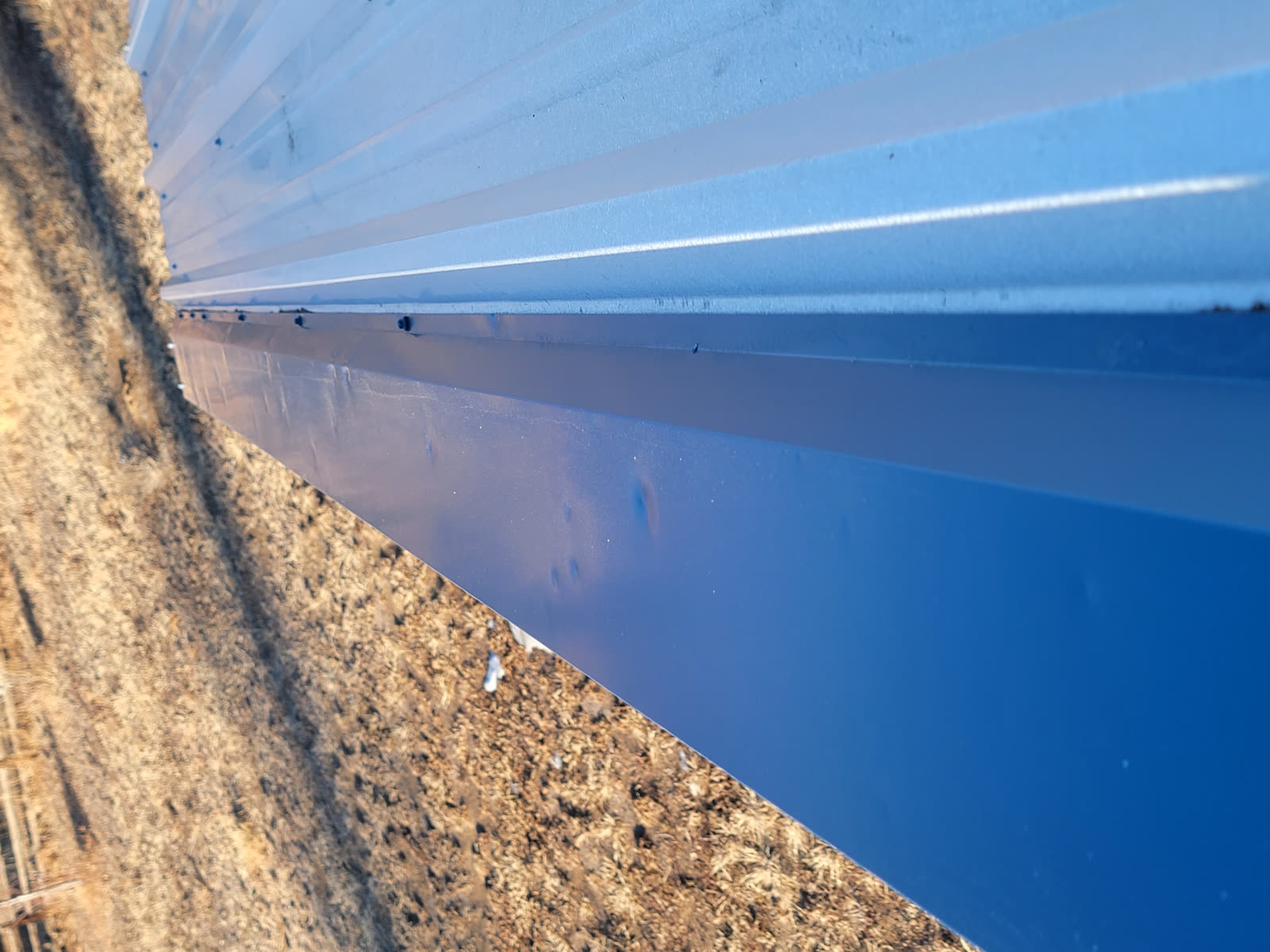
What Hail Size Does to a Roof
| Size | Looks like | What it typically damages |
|---|---|---|
| 0.75″ | Penny | Window screens, paint, thin soft metals |
| 1″ | Quarter | Gutters, vents, AC fins — asphalt shingle damage starts, especially on older roofs |
| 1.25–1.5″ | Half-dollar to ping-pong ball | Bruised and cracked shingles, siding and skylight damage |
| 1.75–2″ | Golf ball to hen egg | Fractured shingles, punctured vents, broken siding |
Typical thresholds only — roof age, material, and how hard the wind drove the hail all change the outcome. That’s why the inspection checks every slope.
Both 2026 storms produced hail in the damaging range: up to golf-ball size in Taylorsville on June 25, and up to an estimated 2 inches near Layton on September 18. See the full 2026 storm record →
From Free Inspection to Final Invoice — and What Utah Law Says
Most Wasatch Front homeowners have never filed a hail claim. Here’s exactly how it works with us, and the Utah rules that protect you while it happens.
Free inspection
We check every slope, mark and photograph each hit, and look at gutters, vents, siding, screens, and your AC condenser.
A written photo report
You get the photos and our findings in writing before you decide anything. If the damage doesn’t justify a claim, we’ll tell you that too.
You file; we meet the adjuster
You open the claim with your insurer. We attend the adjuster’s inspection and walk them through what we documented.
Scope and supplements
We line our estimate up with the adjuster’s scope and document anything uncovered during tear-off, like damaged decking, for the insurer to review.
Build and close-out
Installed to Utah code and manufacturer spec, with the completion photos and invoices your insurer needs to release any withheld depreciation.
Utah Law Is on Your Side
- No deductible deals. Utah Code 13-50-302 bars contractors from rebating or discounting away your deductible. Anyone offering to “cover it” is breaking the law.
- A right to cancel after a denial. Utah Code 13-50-202 gives you five business days to cancel a storm-repair contract after you receive a written claim denial.
- Read any assignment of benefits. Utah Code 13-50-301 requires one to itemize the work and price and to warn you, in capital letters, that you’re giving up certain rights under your policy.
- Check the license. Look up any contractor on the Utah DOPL license lookup before you sign.
Roof Technologies isn’t a public adjuster — your claim stays between you and your insurance company. We document the damage, show it to the adjuster, and do the work.
Big Storms Bring Out-of-State Crews. We Opened an Office Instead.
After a big hailstorm, trucks with out-of-state plates start knocking on doors. Some do fine work — but when the claims dry up they’re gone, and so is whoever was supposed to stand behind the warranty.
Roof Technologies opened a Salt Lake City office to serve the Wasatch Front. Taylorsville homeowners get the same documented process we run through hail seasons in Colorado, Kansas, and Nebraska: a written scope before work starts, one project manager from inspection to final walkthrough, and manufacturer-certified installs.
- A Salt Lake City office, not a pop-up storm crew
- Free inspection with a written photo report
- One project manager from first visit to final walkthrough
- Class 4 impact-rated shingle options and wind-rated installs
- Roof, gutters, siding, windows, paint, and AC fins on one scope
Neighborhoods, ZIPs & Local Conditions in Taylorsville, UT
Roof Technologies serves Salt Lake County from our Salt Lake City office. Here’s where we work and what the local conditions look like.
Neighborhoods & Subdivisions
- Bennion
- Historic Taylorsville
- Valley Regional Park area
- SLCC Redwood campus area
- West Taylorsville (Kearns border)
ZIP Codes Served
- 84123
- 84129
Taylorsville took golf-ball hail (1.75 inches) on June 25, 2026 and quarter-size hail again on September 18 — two damaging storms in one season. On a roof hit twice, the second storm can hide or compound damage from the first, so an inspection here should document both dates.
Taylorsville issues building permits through the city. Utah enforces one statewide construction code, so re-roof requirements match the rest of Salt Lake County; we confirm what your address needs and pull the permit wherever one is required.
Solar in Taylorsville interconnects with Rocky Mountain Power under Schedule 137 net billing — exported power earns an export credit well below the retail rate (reset each March 1), so we size systems to cover daytime use rather than to sell power back. Interconnection paperwork and the city permit are on us.
Taylorsville Sits in the Wasatch Front Service Region
Same crews, same materials, same scheduling priority across the Wasatch Front footprint.
Wasatch Front Storm Record
Hail is far less frequent along the Wasatch Front than on Colorado’s Front Range, which is exactly why 2026 caught so many roofs unprepared. On June 25, National Weather Service storm reports logged golf-ball-size hail in Taylorsville and ping-pong-ball-size hail in Holladay. On September 18, a severe line crossed Davis County with hail estimated up to 2 inches near Layton, 1.5-inch stones in Kaysville and Farmington, a brief tornado on the ridgeline east of Fruit Heights, and half-dollar hail near Mountain Green in Morgan County; later that afternoon, quarter-size hail fell in Taylorsville and West Jordan. Wind is the more familiar threat here: the September 8, 2020 downslope windstorm knocked out power to nearly 200,000 homes and businesses and toppled thousands of trees, with Davis County’s canyon-mouth communities among the hardest hit.
What Our Customers Say
Manufacturers & Accreditations
Related Utah Hail & Claim Resources
Free Hail Inspection & Photo Report in Taylorsville
Tell us where you are and when the storm hit. An inspector from our Salt Lake City office will reach out to schedule, and you’ll get the photo report whether or not you decide to file a claim.
Hail hit Taylorsville? Call our Salt Lake City office.
Hail Damage Questions From Taylorsville Homeowners
Did hail hit your Taylorsville home?
Check your address for hail and wind from the last 2 years — the radar hail estimate for your home, nearby storm reports, and NWS warnings — and get a free PDF storm report.